

October 6, 2026

September 1, 2026 · On Air Productions LA
Coordinating five separate vendors or trusting one team? Here's how all-in-one event production simplifies your LA celebration without sacrificing quality.
Planning a celebration in Los Angeles means juggling a dizzying number of moving parts — the venue in Malibu or Beverly Hills, the caterer, the florist, and of course the music that carries the whole night. One of the biggest decisions couples and planners face is whether to stitch together five separate specialists or entrust the sound, lighting, and entertainment to a single coordinated team. As someone who has spent years running rooms across Southern California with On Air Productions LA, I want to walk you through the real trade-offs — not the sales pitch. If you're learning how to prioritize wedding vendors, this is one of the most consequential calls you'll make.
On paper, hiring a DJ from one company, a saxophone player from another, uplighting from a third, a photo booth from a fourth, and an AV crew from a fifth feels like assembling a dream team. In practice, every one of those relationships carries its own contract, its own point of contact, its own load-in schedule, and its own assumptions about the timeline. When five vendors have never met before your wedding day, you become the general contractor — usually without meaning to.
The Los Angeles venue landscape makes this especially tricky. A garden estate in the Palisades may have a strict noise ordinance and a hard 10 p.m. cutoff. A downtown loft might have a freight elevator that only fits so much gear at once. When each vendor shows up independently, nobody owns the master plan — and small misalignments (a saxophonist who doesn't know the DJ's monitor setup, a lighting tech who arrives after the ceremony rehearsal) become visible to your guests.
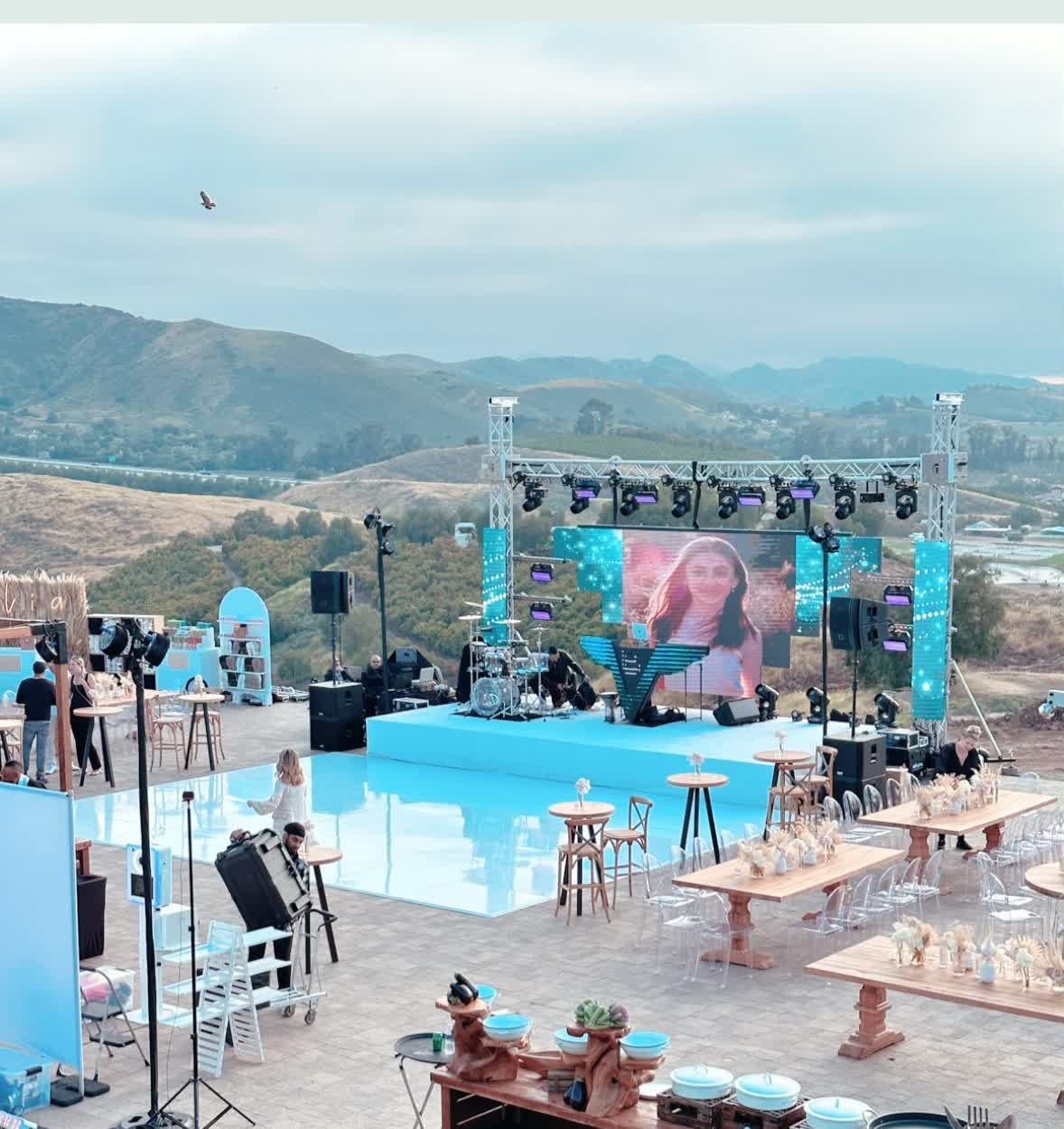
With an all-in-one approach, the sound, the live instruments Los Angeles talent, the lighting, and the AV all speak the same language from day one. That coordination is invisible when it works — and painfully obvious when it doesn't.
Let me be specific, because vague warnings don't help you plan. The most common failure points I see at multi-vendor events aren't dramatic — they're the quiet friction that drains energy from a room.
This is why so many experienced planners in LA gravitate toward integrated production. It's not that independent specialists lack talent — many are excellent. It's that coordination is itself a skill, and it's the one that most directly protects your night.
If you're figuring out how to choose a wedding DJ and considering an integrated team, the evaluation process changes a little. You're not just judging one person's playlist — you're assessing how a whole operation runs. Here are the questions to ask a wedding DJ and production company before you book:
When you book wedding vendors Los Angeles as a coordinated package, you also simplify the paperwork, the deposits, and the day-of logistics into one clean relationship. That alone lowers your stress in the final month, which is worth more than most couples anticipate.
This philosophy isn't only for weddings. The integrated model earns its keep across the full range of celebrations we see in Southern California.
A wedding has more transitions than any other event — ceremony, cocktail hour, grand entrance, first dance, hora, dinner, open dancing. A unified team choreographs the audio and lighting through every beat. Whether you're planning a Jewish wedding DJ Los Angeles celebration or a fusion of traditions, seamless handoffs keep the emotional arc intact.
A Bar Mitzvah DJ Los Angeles event lives on energy management. Kids, teens, and adults all need to feel included, and the pacing between hype moments and family traditions has to be handled with care. When the DJ, MC service, and lighting come from one Bar Mitzvah entertainment Los Angeles crew, the whole night flows without dead air.
For corporate event entertainment Los Angeles, brand experiences demand reliability — clean AV, on-cue lighting, and music that matches the room. Product launches, grand openings, and galas benefit enormously from one team owning both the technical and creative sides.
Across all of these, the goal is the same: when you hire event entertainment Los Angeles that already functions as a unit, you remove the seams that guests would otherwise feel.
It shouldn't be. A strong production company offers modular options — live bands for events Los Angeles, a DJ and a violinist, LED walls, uplighting, and more — so you customize freely while keeping one accountable team. You get flexibility and coordination, not a trade-off between them.
That's completely normal, and it doesn't conflict with integrated entertainment production. The all-in-one principle applies to the sound, music, lighting, and AV ecosystem — the parts that most need to communicate in real time. Your favorite photographer slots in beautifully alongside a well-run entertainment team.
Yes, meaningfully so. When a DJ with a live drummer or DJ and a live singer perform as a rehearsed unit, the tempo, key, and energy sync naturally. Two separately-booked acts have to negotiate all of that on the fly, often mid-event.
Begin with a conversation about your vision, your venue, and your must-have moments. A free consultation lets you gauge how a team thinks and communicates before you commit to anything.
There's no universally right answer — some couples genuinely enjoy assembling a boutique roster of specialists, and that can be wonderful when everyone happens to click. But for most people planning a celebration in Los Angeles, the peace of mind that comes from one coordinated team is the quiet luxury that makes the whole night feel effortless. If you value seamless transitions, a single accountable point of contact, and entertainment that reads your room as one voice, the all-in-one model is worth serious consideration. When you're ready to explore what that looks like for your event, we'd be glad to talk it through — no pressure, just a real conversation about your day.
Get more of On Air on Google
Enjoying our event tips? Make On Air Productions LA a preferred source on Google — one tap, and our articles, videos and updates show up more in your Search results and AI answers.
Planning an event in Los Angeles? Explore what On Air Productions LA can do for you:
On Air Productions LA brings world-class entertainment to weddings, Bar Mitzvahs, corporate events, and private celebrations across Los Angeles.
Get a Free QuoteDiscover More
 Entertainment
September 13, 2026
 Jewish Weddings
July 28, 2026
Wedding DJJuly 2, 2026
 Weddings
July 9, 2026


