


Jewish & Israeli Wedding Guide Los Angeles
The Traditions, the Hora, and the Music That Carry the Night
The Traditions, the Hora, and the Music That Carry the Night
A Jewish or Israeli wedding is a celebration like no other — steeped in tradition, and built to explode into joy the moment the ceremony ends. This guide walks through what shapes the day in Los Angeles: the ceremony, the hora, and above all the music that carries an Ashkenazi, Sephardic, Mizrahi or Persian-Jewish night from the chuppah to the last dance.
The ceremony follows a beautiful arc — the reception of guests, often a badeken (veiling), the seven blessings and the ring under the chuppah, the ketubah, and the breaking of the glass that sends the room into 'Mazal tov!' Then the celebration begins, and it almost always opens with the hora: the circle dance, the chairs lifted high, the energy that defines the entire night. Getting the hora right — with a DJ who knows the music and a live drummer or saxophonist driving it — is everything.
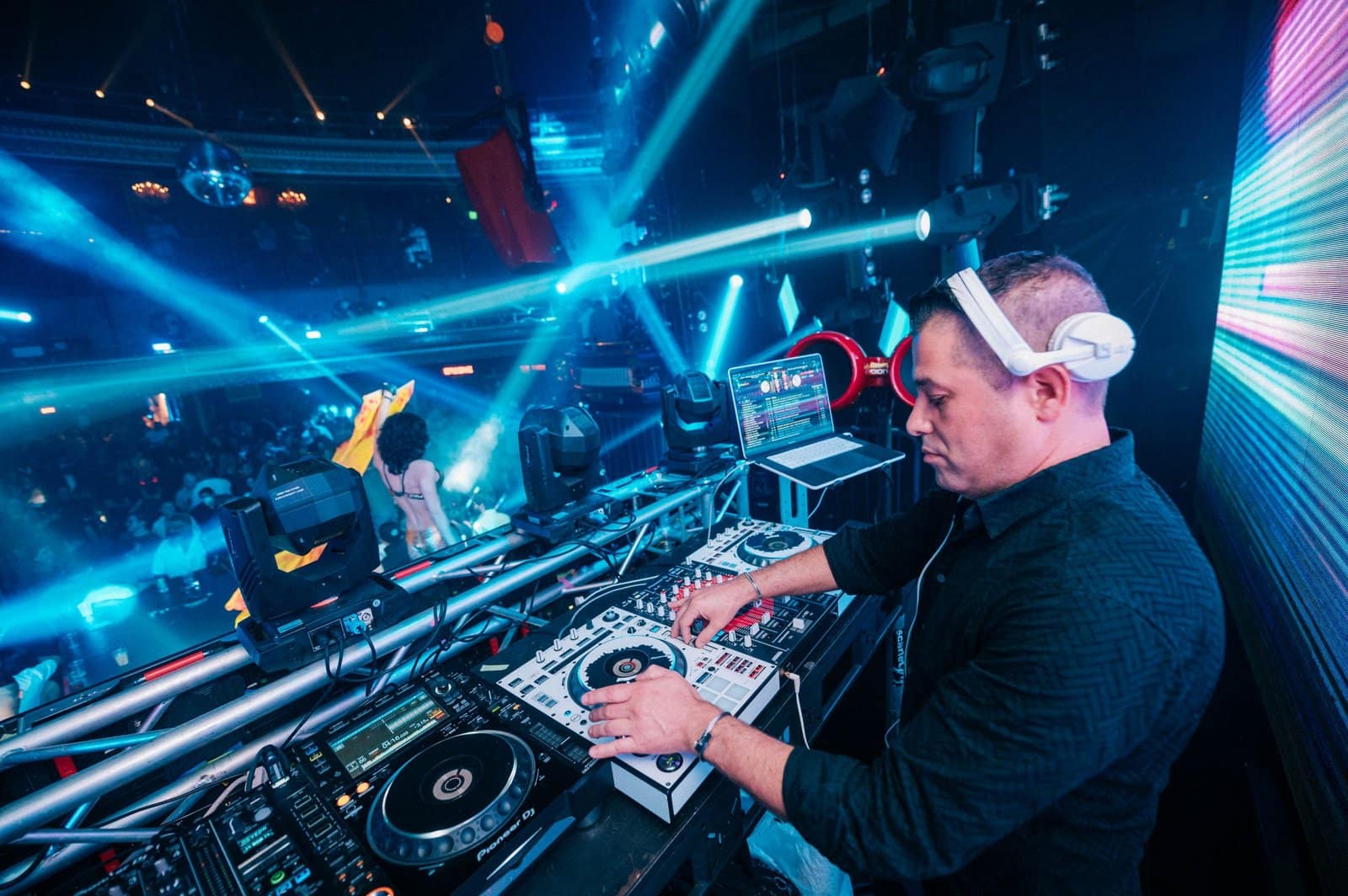
The music itself is a living blend. Hebrew and Israeli classics and current pop, simcha and hora music, and the specific repertoire of your family's tradition — Ashkenazi, Sephardic, Mizrahi or Persian-Jewish — woven with the open-format hits that keep every generation dancing. The difference between a nice wedding and an unforgettable one is a DJ who genuinely knows this music and reads which crowd is in the room in real time.
That's what On Air Productions LA is built for. DJ Gilad Emesh is Israeli and deeply rooted in the community, and it's all one team — DJ, live musicians, MC, sound, lighting and production — tailored to your family's traditions. Serving Jewish and Israeli weddings across Los Angeles, from Beverly Hills and the Westside to the San Fernando Valley.
What's Included
The ceremony, step by step
What Happens at a Jewish Wedding Ceremony?
A Jewish wedding ceremony usually takes place under the chuppah, a canopy that stands for the couple's new home. In many weddings it opens with the bride circling the groom, continues with blessings over wine and the ring, the reading of the ketubah (the marriage contract) and the seven blessings, and ends when a glass is broken and everyone shouts Mazel tov. Customs vary, and your rabbi or officiant leads it.
Before the ceremony, many couples sign the ketubah with two witnesses, and in many Ashkenazi families the groom lowers the veil over the bride's face at the badeken. Ashkenazi, Sephardic, Mizrahi and Persian-Jewish families do some of these steps differently, and many couples adapt them, so read the order below as the common shape of the ceremony, not a rule.
| Moment | What happens | Music and sound |
|---|---|---|
| Processional | The wedding party and the couple walk to the chuppah; in many families both parents walk each of the couple down the aisle. | A song for the family, often a different one for each of the couple |
| Circling | In many traditions the bride circles the groom seven times, or three; many couples now circle each other. | A slow song or a niggun, a wordless melody, under the circles |
| Betrothal | Blessings over a first cup of wine, then the ring, with the traditional Hebrew words; many couples exchange two rings. | Quiet, so the officiant's microphone carries every word |
| Ketubah | The marriage contract is read aloud, often in Aramaic with an English translation. | A microphone for the reader |
| Seven blessings | Seven blessings are said or sung over a second cup of wine, often by relatives and friends, one each. | A microphone passed from reader to reader, or a cantor who sings them |
| The glass | The groom, or the couple together, breaks a wrapped glass and the guests shout Mazel tov. | The recessional starts on the shout |
| Yichud | Many couples spend a few minutes alone together right after the ceremony. | Music carries the guests to cocktail hour |
Customs vary by family and community, and your rabbi or officiant leads the ceremony and decides its order.
Good to Know
Frequently Asked Questions
What is the order of a Jewish wedding ceremony?
Traditions vary by family and community, but a common sequence is: the kabbalat panim (reception of the guests) and often a tish and badeken (veiling), then the ceremony under the chuppah — the seven blessings, the ring, the ketubah — and it closes with breaking the glass and shouts of 'Mazal tov!' Then the celebration begins, opening almost universally with the hora.
What is the hora and why does it matter so much?
The hora is the joyous circle dance that opens a Jewish celebration — guests spinning arm-in-arm while the couple (and often parents and the guest of honor) are lifted on chairs. It sets the entire energy of the night. The music has to build and drive it, which is why an experienced Jewish/Israeli DJ — and a live drummer or saxophonist over the set — makes the hora unforgettable.
How is the music different at a Jewish or Israeli wedding?
It's a living blend: Hebrew and Israeli classics and current pop, hora and simcha music, and — depending on the family — Ashkenazi, Sephardic, Mizrahi or Persian-Jewish repertoire, woven with the open-format hits every generation loves. A DJ who genuinely knows this music, and reads which crowd is in the room, is the difference between a nice wedding and one that never leaves the dance floor.
What are the differences between Ashkenazi, Sephardic, Mizrahi and Persian-Jewish weddings?
They share the core ceremony but differ in music, rhythm and custom — Ashkenazi (Central/Eastern European), Sephardic (Iberian/Mediterranean), Mizrahi (Middle Eastern) and Persian-Jewish celebrations each have their own sound and signature moments. A great LA Jewish wedding DJ tailors the night to your family's specific traditions rather than a one-size-fits-all playlist.
Do we need a DJ, a live band, or both?
Both work beautifully, and many couples combine them — a DJ driving the flow with live musicians (a saxophonist, drummer or singer) on top for the hora and peak moments. From On Air Productions LA it's all one team, so the DJ and live players are coordinated to one timeline.
How do we plan the entertainment for our Jewish or Israeli wedding in LA?
Call On Air Productions LA at (310) 200-1134 or send an inquiry. DJ Gilad Emesh is Israeli and deeply familiar with the community, the music and the traditions — we'll build a night tailored to your family, from the chuppah to the last dance.
What are the seven blessings at a Jewish wedding?
The seven blessings, sheva brachot in Hebrew, are recited over a cup of wine near the end of the ceremony: they bless the wine, praise God for creation and for creating people, and ask for joy for Jerusalem and for the couple. Many couples invite relatives or friends to say one each, in Hebrew, in English or in both.
Why does the bride circle the groom at a Jewish wedding?
Circling is an old custom with more than one explanation: many families say the seven circles recall the seven days of creation, or build a wall of protection around the couple's new home, and some brides circle three times. Many couples today circle each other, and your rabbi or officiant will explain the version your family keeps.
What is yichud after a Jewish wedding?
Yichud, Hebrew for togetherness, is a few minutes the couple spends alone in a private room right after the ceremony, and many couples who fasted that day eat their first bite there. Guests move to cocktail hour meanwhile, so the music keeps going until the couple's grand entrance.
Real Reviews
What Our Clients Say
“On Air Productions was so professional and fun. Dj Gilad set up lighting, speakers and a Photo Booth at my wedding. The dance floor was never empty and packed with people dancing. He played everything we asked and more. He kept the party going all night. He was so personable, and listened to all Of our requests. I highly recommended Gilad if you want a party to remember. I Will definitely hire him again for future events.”
“Gilad was our wedding DJ and he was amazing. He was flexible and reasonably priced. He is passionate about what he does and has a great team. Thank you for everything Gilad!! We loved our wedding music.”
“What an amazing experience! The best DJ !!! Such great work, energy and lovely personality. I will rehire him again for future events. Thank you for making our wedding a blast and a celebration I could never forget.”
“Dear Gilad, we really don’t know how to thank you enough! Gilad did a fantastic job playing great music that got everyone going on the dance floor! The music was great, everyone had such an amazing time. Highly recommended 👍”
Get A Quote