
Orthodox Jewish Wedding Music in Los Angeles

Kabbalas panim to the last circle, planned with you

Orthodox Weddings · Los Angeles

One night, many moments — each with the music it calls for

Orthodox Jewish wedding music in Los Angeles, from On Air Productions LA, follows the order of the day: quiet music while the kallah (the bride) receives her guests, melodies for the walk to the chuppah (the wedding canopy), the first dance set when the couple comes out of yichud (the few minutes they spend alone after the ceremony), dinner music, a second set, and — for families who keep it — the mitzvah tanz. We plan each part with you, for separate dancing on both sides of a mechitza, and to the standards your family keeps.

No two Orthodox weddings sound the same. A Chassidic family may want the classic simcha songs at full tempo and a mitzvah tanz at the end; a yeshivish crowd may want the newest Jewish dance hits; a Modern Orthodox couple may mix Jewish pop with a few Israeli favorites. We start by asking, and the music plan you approve is the one we play.

Planning another simcha as well? See the Orthodox Jewish DJ in Los Angeles page for Bar and Bat Mitzvahs, sheva brachot, vorts and more.

Ofek Ben Harush in a light gray suit, singing into a microphone in front of a white floral wedding canopy

What We Provide

The music of an Orthodox wedding, part by part

Kabbalas Panim, the Tish and the Badeken

Before the chuppah comes the kabbalas panim, the reception before the ceremony, and it runs in two rooms. The kallah sits on her chair and greets the women; in another room the chassan's tish — the groom's table — fills with friends, rabbis and singing. Many families keep the tish to the voices of the people in it, while the kallah's side has soft background music.

When the chassan is brought to the kallah for the badeken — the moment he lowers her veil — the walk is usually loud with singing, and Od Yishama is a familiar choice. We agree with you beforehand whether recorded or live music plays during that walk, or whether the room is left to the singing of the guests.

  • Soft background music for the kallah's reception
  • The tish left to the guests' singing, unless you ask otherwise
  • A plan for the walk to the badeken
  • Sound for the speeches and the rabbis

Chuppah Music: Niggunim and Slow Hebrew Melodies

The chuppah is where the music matters most and is heard least: soft melodies while the families walk down, a separate song for the kallah, and quiet while the blessings are said. Mi Bon Siach and Mi Adir are long-standing chuppah niggunim; Chabad families often walk the chassan in to Daled Bovos; others ask for Basi Legani, Ani Maamin or a Carlebach melody. Some families have a chazzan or a singer, others a recording.

In Ashkenazi families the kallah usually circles the chassan — seven times in many homes — and the music holds through every circle; most Sephardic brides don't circle. When the glass breaks, the room shouts mazal tov and breaks into Siman Tov U'Mazal Tov as the couple walks out to yichud. We time every cue with your officiating rabbi and the family members walking, so nothing starts early or runs out.

  • A processional song for each part of the walk
  • A separate melody for the kallah
  • Music held through the circling, where it is your custom
  • A joyful exit after the glass breaks

The First Dance Set: The Couple Comes Out of Yichud

When the couple comes out of yichud and into the hall, the first dance set begins — and at an Orthodox wedding it is the peak of the night. The chassan disappears into a circle of men, the kallah into a circle of women, and both circles keep growing until everyone is in.

This set needs a long arc rather than a playlist: a strong entrance, a build through the fast simcha songs, room for the friends' shtick, and a moment for the chassan and kallah to be lifted. We pace it to the room, and we know in advance which songs your crowd will not stop singing.

  • A planned entrance for the couple
  • A long build for the men's and women's circles
  • Room for shtick, props and the chair lift
  • Songs your crowd knows by heart

Separate Dancing: Sound Planned for Both Sides of the Mechitza

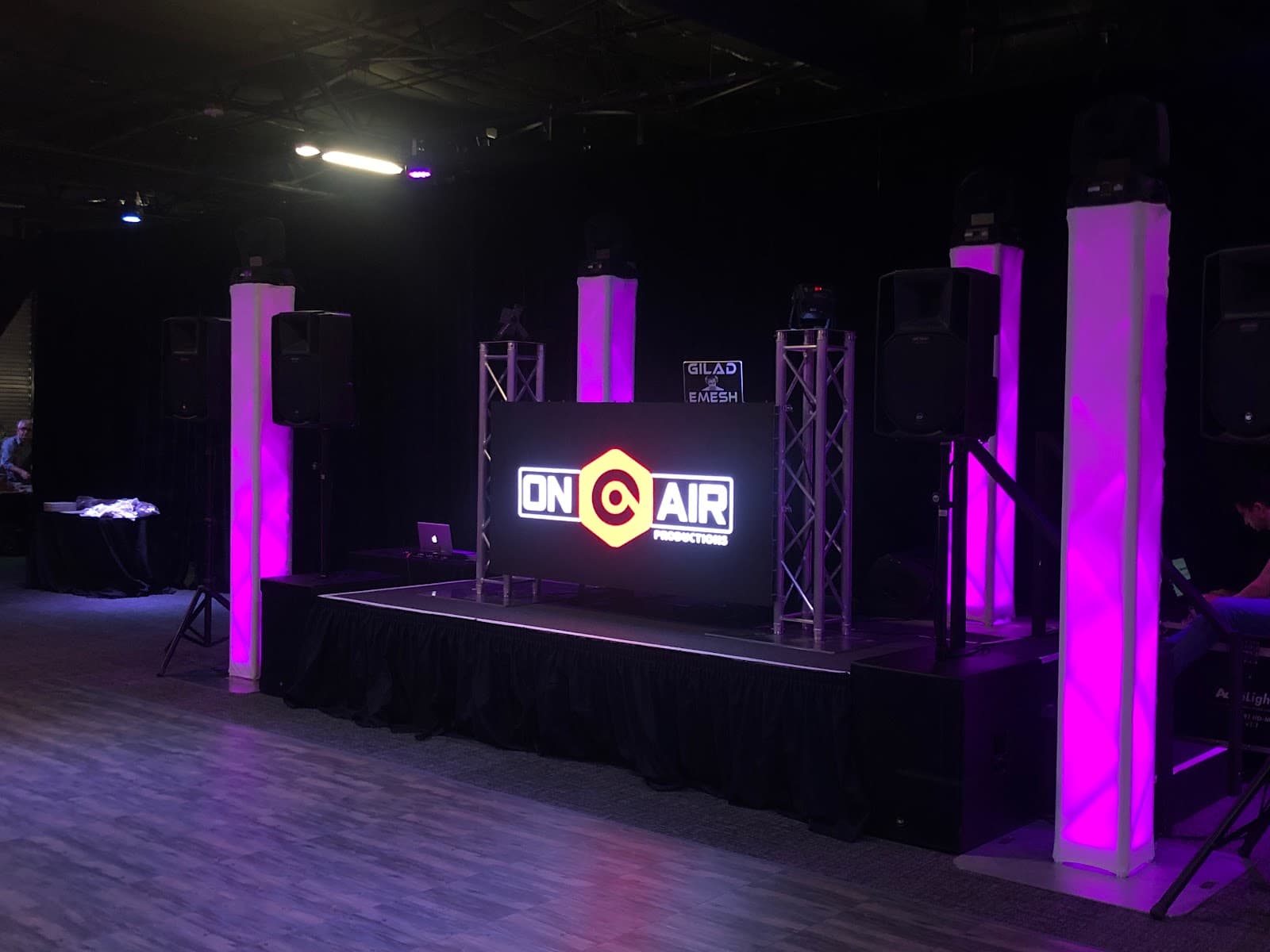
Separate dancing works when the women's side and the men's side get the same, clear music. We set speakers on each side of the mechitza and place the DJ booth at a spot agreed with you and the hall, so it serves both sides. Some halls write their own rules for music vendors around the mechitza; we follow them.

We walk the floor plan with you and the hall: where the mechitza stands, how tall it is, where power is available, and how the dancing will move. Every hall is laid out differently, and the plan is made for yours.

  • Matched speakers for the men's and women's sides
  • DJ booth placed to see and serve both circles
  • Floor plan agreed with the hall before the day
  • Volume that keeps both circles dancing and the tables talking

Dinner Music, the Second Set and Benching

Between the sets, dinner music gives the room a chance to talk — softer Jewish music, a few slow Hebrew songs, nothing that competes with the speeches. Then the second dance set brings everyone back to the floor, often with more of the friends' shtick and the songs the younger guests have been waiting for.

At the end of the meal comes Birkat Hamazon and, at a wedding, the sheva brachot after it. We stop the music for them and bring the microphones to the people honored, in the order your family sets.

  • Dinner music kept below conversation
  • A second set built for the rest of the night
  • Microphones ready for the sheva brachot
  • The order of honors planned with the family

The Mitzvah Tanz and the Mezinke

In many Chassidic families the wedding ends with the mitzvah tanz, a custom kept after the meal: the kallah holds one end of a gartel or a sash while honored relatives and rabbis are called up one by one to dance opposite her, often by a badchan. It is unhurried and full of feeling, and the music under it — often a slow tune or the family's own niggun — is chosen with that in mind.

When parents marry off their youngest child, many families seat them in the middle and dance the mezinke around them, often to the old Yiddish tune written for it. If either is part of your wedding, we plan the music, the timing and who calls the names, so the end of the night is as carefully planned as the beginning.

  • Mitzvah tanz music chosen with the family, for Chassidic weddings
  • Names and order prepared with whoever calls them
  • A mezinke dance for the parents, where it is your custom

For Every Kind of Event

Orthodox weddings in every tradition

Chassidic weddings

The classic simcha songs at full tempo, long circles for the men and the women, and a mitzvah tanz at the end of the night for families who keep it.

Yeshivish weddings

Fast Jewish dance music, the newest songs the chassan's friends know, and plenty of room in the first set for their shtick.

Modern Orthodox weddings

Jewish pop and simcha songs, a few Israeli favorites if you want them, separate or mixed seating as you decide, and an MC who works in English and Hebrew.

Chabad weddings

Daled Bovos as the chassan is led to the chuppah, Chabad niggunim through the dancing, and a music plan prepared with you and, if you wish, your rav.

Sephardic and Persian Orthodox weddings

Mizrahi and Middle Eastern rhythms beside the Ashkenazi simcha songs, live darbuka on request, and Hebrew songs for the family moments.

Israeli religious weddings

Israeli religious music for the chuppah and the dancing, sung in Hebrew, for couples who met in Israel or whose families live there.

Planning Guide

How to plan the music for an Orthodox wedding

Start with the run of the evening

Write the order first — kabbalas panim, badeken, chuppah, yichud, first set, meal, second set, benching — and give each part a start time. The music is planned around that order, not the other way round.

Give the chuppah its own list

Name a melody for each group walking and a separate one for the kallah. Ask your rabbi when he wants silence, so the music never runs over a blessing.

Tell us who is in the first circle

The chassan's friends, his rebbeim, the kallah's friends: who leads, who brings shtick, and when the lifting happens. It decides how long the first set should run.

Measure the hall with the mechitza in it

Floor plans often leave the partition out. Mark where it stands and how tall it is, then place the DJ and the speakers; both circles should hear the same music.

Write your standards into the contract

Jewish music only, male vocals only, how loud, which announcements in which language — put it on paper, so everyone working the wedding plays to the same rules.

Decide early about the mitzvah tanz

If your family dances a mitzvah tanz, prepare the names and the order with the person calling them, and leave enough time at the end of the night for it.

What's Included

  • A planning call about the order of your wedding and your music standards
  • Background music for the kabbalas panim
  • Chuppah music cued with your officiating rabbi
  • Two dance sets planned for separate circles
  • Speakers on both sides of the mechitza
  • Dinner music, and microphones for the sheva brachot
  • Mitzvah tanz or mezinke music where it is your custom
  • An MC in English and Hebrew on request
  • Optional live drummer, darbuka or male Israeli vocalist
  • One personalized quote for the whole wedding

Where we play Orthodox weddings

Los Angeles · Pico-Robertson · Hancock Park · Beverly Hills · Beverlywood · Westwood · Santa Monica · Malibu · Valley Village · North Hollywood · Studio City · Sherman Oaks · Encino · Tarzana · Calabasas · Orange County · Irvine · San Diego · La Jolla · Santa Barbara · Palm Springs · Las Vegas

Common Questions

Orthodox Jewish Wedding Music in Los Angeles — FAQ

Who provides music for Orthodox Jewish weddings in Los Angeles?

On Air Productions LA, a DJ and entertainment company based in Encino, plans the music for Orthodox Jewish weddings across Los Angeles: chuppah melodies, two dance sets for separate circles on either side of the mechitza, and the mitzvah tanz for families who keep it. It was founded in 2005 by Israeli-born DJ Gilad Emesh, a DJ and an MC in Hebrew and English.

What music is played at an Orthodox Jewish wedding?

Mostly Jewish music, matched to each part of the night: slow niggunim such as Mi Bon Siach for the chuppah, fast simcha songs for the first and second dance sets, softer songs during dinner, and for many Chassidic families special music for the mitzvah tanz. Exactly which songs, and whether any Israeli or English music is played, is set by each family.

How does music work with separate dancing at an Orthodox wedding?

Both circles dance to the same music. We put speakers on each side of the mechitza so the men's and the women's sides hear it equally, and place the DJ booth where it can serve both, at a spot agreed with you and the hall before the wedding.

What is played under the chuppah at an Orthodox wedding?

Usually soft melodies while the families walk down, a separate song for the kallah, and quiet while the blessings are said. Long-standing chuppah niggunim include Mi Bon Siach and Mi Adir, and after the glass breaks the room usually sings Siman Tov U'Mazal Tov. We time each cue with your officiating rabbi.

What happens during the first dance set?

When the couple comes out of yichud and into the hall, the men surround the chassan and the women surround the kallah, and the dancing builds from there — fast simcha songs, the friends' shtick and the moment the couple is lifted. It is usually the longest and most energetic part of the night, so we plan it as one long arc.

What is the mitzvah tanz?

A custom kept at the end of the wedding in many Chassidic families (not in Chabad): the kallah holds one end of a gartel or sash while honored relatives and rabbis are called up in turn to dance opposite her. If your family keeps it, we plan the music and the order of names with you.

How long is an Orthodox Jewish wedding?

It runs through an evening: kabbalas panim and the badeken, the chuppah, then a meal with two dance sets, and benching with the sheva brachot. The exact length depends on your schedule and the hall, and we plan the music timeline to match it.

Can our wedding have only male vocals?

Yes. If your family keeps kol isha, we build the whole program from songs sung by men, from the chuppah to the last set, and any live singer we bring is a male vocalist. The standard is written into the music plan you approve.

Can the music at our wedding be Jewish music only?

Yes. Many Orthodox families ask for a Jewish-music-only program, and we build it from the styles your crowd dances to — Chassidic, yeshivish, Carlebach, Jewish pop, Sephardic or Israeli religious music.

Can we add a live drummer or a singer to the DJ?

Yes. A live drummer or a darbuka player can play over the dance sets, and Ofek Ben Harush, a male Israeli vocalist on our roster, can sing Hebrew songs live. Tell us what you have in mind and we will check availability for your date.

Do you play Orthodox weddings outside Los Angeles?

Yes. We bring the DJ, the sound and our crew to Orthodox weddings in Orange County, San Diego, Santa Barbara, Palm Springs and Las Vegas. Send the date and the hall and we will confirm availability.

How much does music for an Orthodox wedding cost in Los Angeles?

It depends on the date, the hours, the hall and its layout (sound on both sides of the mechitza), whether you add an MC, live drums, darbuka or a live vocalist, and any travel. Every wedding is planned and quoted on its own. Contact us for a personalized quote.

Real Reviews

What Our Clients Say

Verified Google review

“Gilad was the DJ in our wedding! He is the besttttttttt and we are so happy that we chose him and met such a lovely person! Highly recommend”

Eden D.
Wedding
Verified Google review

“Outstanding DJ at my son's bar mitzvah! The music was perfect, and everyone had a blast. Thanks for making it unforgettable!”

Tomer E.
Bar Mitzvah
Verified Google review

“Best DJ you can ask for We had 100 guests and the all voted 10 for Gili He gave us all we need and more”

Leo G.
Celebration · 100 guests
Verified Google review

“If I could give On Air Productions LA more than 5 stars, I would! As a bride, one of my biggest wishes was to have a wedding where everyone was on the dance floor from beginning to end—and that’s exactly what happened thanks to DJ Gilad Emesh. From our first conversation, Gilad was professional, attentive, and genuinely cared about making our day unforgettable. He understood our vision, read the crowd perfectly, and created the most incredible energy all night long. Every song flowed seamlessly, and our guests are still talking about how amazing the music was. The entire team at On Air Productions LA made everything feel smooth and stress-free, allowing us to truly enjoy every moment of our special day. If you’re looking for an entertainment company that is reliable, talented, and knows how to create an unforgettable celebration, I couldn’t recommend them more. Thank you, On Air Productions LA and DJ Gilad Emesh, for making our wedding the best night of our lives!”

Sarit Z.
Wedding

Get A Quote

Planning an Event in Los Angeles?

  1. 1 · Your event
  2. 2 · Your details
1
What are you celebrating?
Event date