

Oct 22, 2026
Oct 22, 2026 · On Air Productions LA
Why the glass is broken at a Jewish wedding, who breaks it, what guests shout, a short script for the officiant, and the music that follows.
Breaking the glass at a Jewish wedding happens at the end of the ceremony under the chuppah, the wedding canopy: the groom steps on a wrapped glass, or the couple does it together, and everyone shouts "Mazel tov." The most common explanation is that it recalls the destruction of the Temple in Jerusalem, a moment of memory inside the joy.
There is no single answer, and families give different ones. The explanation heard most often is memory: the broken glass recalls the destruction of the Temple in Jerusalem, so that even at the happiest moment of a couple's life, that loss is not forgotten. Chabad.org describes the custom as one that "primarily commemorates the fall of Jerusalem," and in many communities the verse from Psalm 137 that begins "If I forget you, O Jerusalem" is sung or said just before the glass breaks.
The custom has deep roots. The Talmud (Berakhot 30b–31a) tells of a rabbi who saw the rabbis at his son's wedding growing too merry and broke a precious cup in front of them, to bring a moment of seriousness back into the room. Over the centuries the broken glass came to be tied to the memory of Jerusalem. In Hebrew the custom is called shevirat ha-kos (שבירת הכוס), "the breaking of the cup." Other meanings families give today:
Your rabbi or officiant will have their own way of explaining it, and many couples ask for a sentence about its meaning before the glass is broken, so every guest understands what they are about to see.
Traditionally the groom breaks the glass with one firm step. Many couples now share the moment: 18Doors, an organization for interfaith families, notes that some couples break the glass together, and some break two glasses, one each. There is no wrong choice among these, but make it ahead of time and tell your officiant, your photographer and your DJ, because all three are waiting for the same second.
Breaking the glass under the chuppah is also the moment the couple turns from the ceremony to their guests, so think about where each of you will stand. The person breaking it needs a little space, a firm floor and a clear view of the glass, and the photographer needs to know which side to shoot from.
"Mazel tov," or mazal tov in Israeli Hebrew. It means congratulations and good luck, and the whole room shouts it the instant the glass breaks. It is the cue that the ceremony is over and the party has begun, so expect clapping, singing and, at many weddings, a crowd rushing to hug the couple.
In a room where some guests are new to Jewish weddings, a short line from the officiant gets everyone shouting together. That is why so many couples ask for a few words just before the glass.
Your rabbi or officiant will choose the words. Couples often hand them a few lines like these as a starting point, and they take well under a minute to say:
"We close this ceremony with the breaking of the glass. For many families it recalls the destruction of the Temple in Jerusalem, a reminder to keep memory close even in our happiest moments. It also reminds us that love, like glass, is precious and needs care. When you hear the glass break, please join us in shouting Mazel tov."
If the ceremony is in Hebrew and English, the officiant can say the explanation in English and the blessing in Hebrew; either way, the last sentence is the one that matters most to your guests.
For whoever is running the music, the glass is the most important cue of the ceremony. The room goes from quiet to loud in one second, and the music has to arrive with the shout, not after it. This is how it usually runs when we play a Jewish wedding:
If you have an MC, they stay quiet through this moment and speak only once the couple has left the aisle. Whoever plays your wedding should know this order by heart, and so should an MC who hosts in Hebrew and English. Our Jewish wedding DJ page explains how we plan every part of the ceremony with the couple and their rabbi, and our guide to what happens at a Jewish wedding, hour by hour shows where the glass sits in the whole day.
The recessional is the first song of the celebration, so it should sound like one. Some couples choose a traditional song, some choose a pop song the whole room knows, and many do both: a traditional song for the walk out, then a favorite as the guests rise. These Jewish wedding songs and crowd favorites all work, and every one of them was checked in a music catalogue before it went on this list:
Tell your DJ which version you want and whether a live musician will start it. If a live Israeli singer is part of your ceremony, ask them to take Siman Tov from the first bar while the DJ brings the full sound in behind them; an Israeli wedding singer who knows the song can carry the whole walk out, and a saxophone works the same way. For the rest of the ceremony, our guide to Jewish wedding ceremony songs, from the badeken to the yichud goes moment by moment, and our guide to the hora and the chair lift picks up where the celebration begins, with the Israeli wedding songs that fill the first dance set.
A few practical details keep the moment clean and keep the shards where they belong:
Many couples do. Keep the pouch closed after the ceremony and hand it to someone you trust; later, some couples have the pieces made into a Jewish wedding glass keepsake, such as a mezuzah case, a small frame or a piece of glass art for their home. If you want to keep it, tell the person collecting the pouch, so it doesn't leave with the ceremony decorations at the end of the night.
The reason given most often is to remember the destruction of the Temple in Jerusalem, even at a moment of great joy. Many couples also see it as a reminder that marriage, like glass, is precious and needs care. It closes the ceremony, and the guests answer it with "Mazel tov."
Shevirat ha-kos (שבירת הכוס), which means "the breaking of the cup." Most English speakers simply call it breaking the glass, and the shout that follows it is "Mazel tov."
Traditionally the groom breaks it, and today many couples break it together or break one glass each. Decide with your rabbi or officiant beforehand, and tell your DJ and photographer which way it will go.
Many interfaith couples include it, usually with a few words from the officiant about what it means. Talk it through with whoever leads your ceremony, since they decide how it fits.
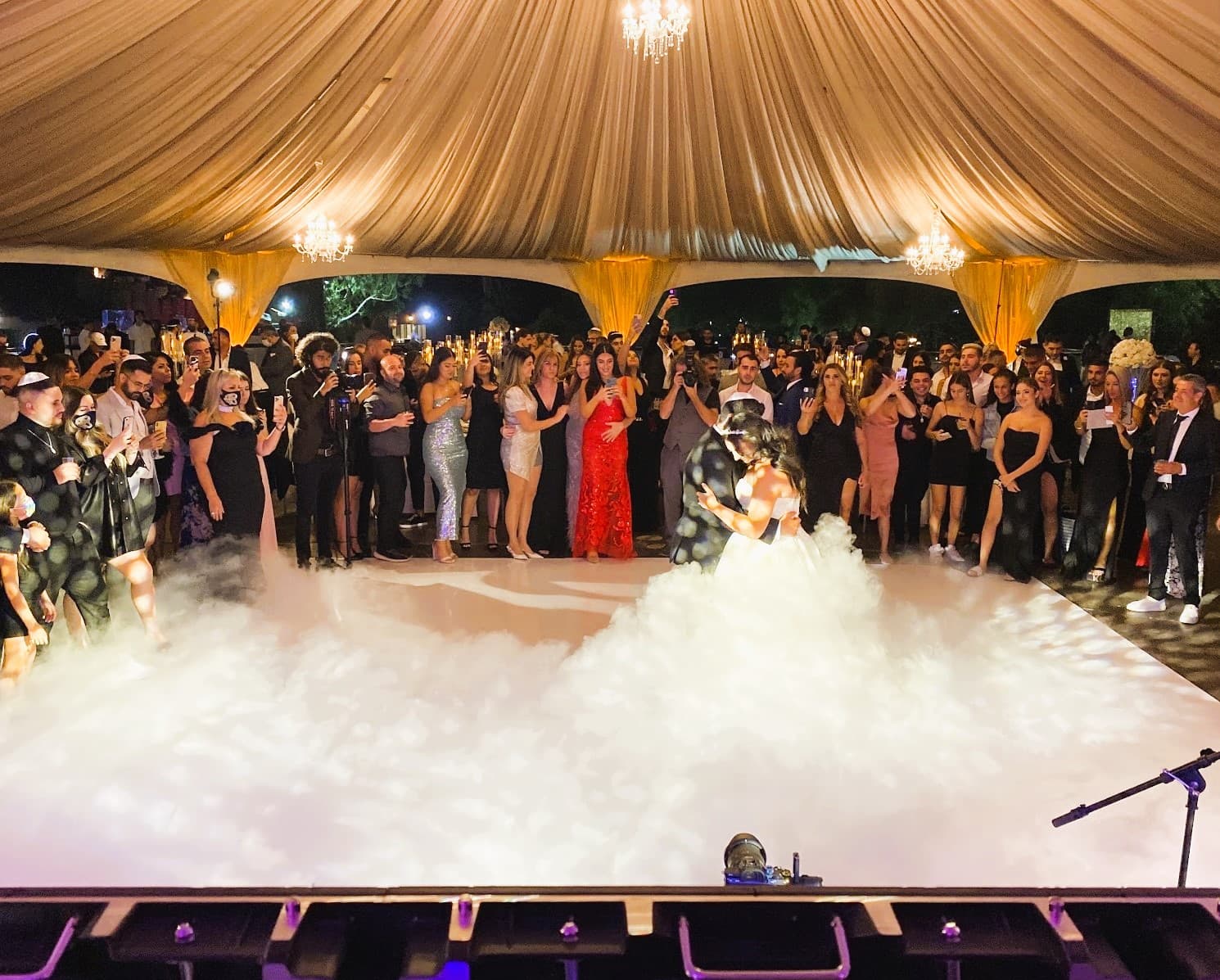
Breaking the glass takes one second, and the next few minutes set the tone for the whole night. Whether you are looking for a DJ for a Jewish wedding or a DJ for an Israeli wedding, we plan that moment with every couple: the microphones, the cue, the recessional and the walk into the celebration. Read our Jewish and Israeli wedding guide for Los Angeles, watch a packed dance floor at one of our Jewish weddings, and if you are still choosing a place, start with our 12 questions to ask a Jewish or kosher wedding venue. Then send us your date, and we'll put together a personalized quote.
Get more of On Air on Google
Enjoying our event tips? Make On Air Productions LA a preferred source on Google — one tap, and our articles, videos and updates show up more in your Search results and AI answers.
Planning an event in Los Angeles? Explore what On Air Productions LA can do for you:
On Air Productions LA brings DJs, MCs, live music and full production to weddings, Bar Mitzvahs, corporate events, and private celebrations across Los Angeles.
Get a Free QuoteDiscover More
 Tips
Sep 3, 2026
 Weddings
Jul 9, 2026
 Jewish Culture
Oct 20, 2026
 Bar Mitzvah
Oct 6, 2026

