
Oct 22, 2026

Jul 29, 2026 · On Air Productions LA
A Los Angeles insider's guide to choosing the perfect music for every moment of your Jewish wedding ceremony, from the badeken to the yichud.
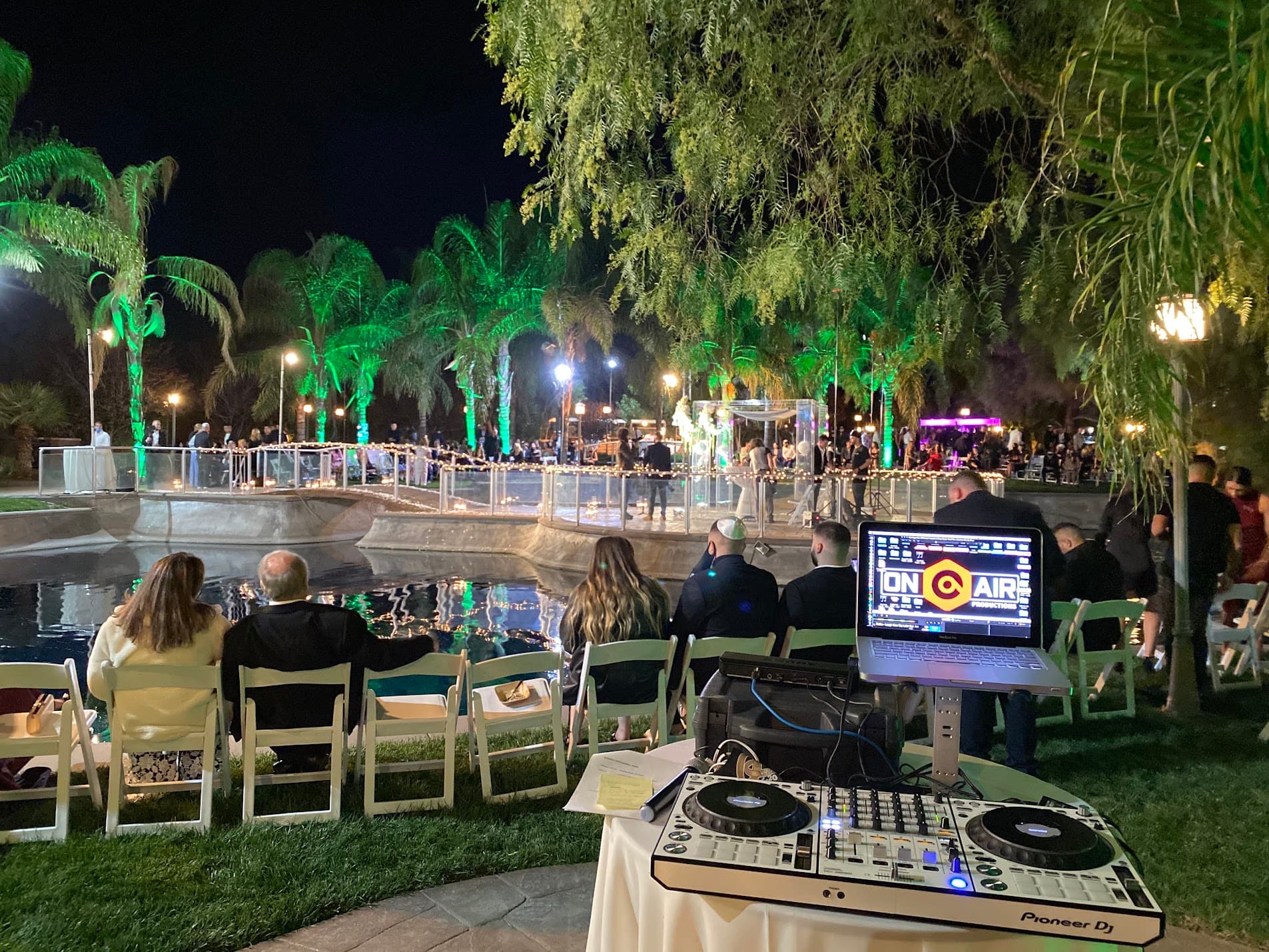
There's a moment at every Jewish wedding I've worked in Los Angeles when the room goes completely quiet — the guests turn, the music swells, and suddenly centuries of tradition and one couple's love story become the same thing. As the lead entertainment team behind countless simchas across LA and Southern California, we've learned that ceremony music isn't background noise. It's the emotional architecture of your entire wedding. Get it right, and the memories are indelible. In this guide, I'll walk you through the music for each ceremony segment — from the badeken to the chuppah to the yichud — with real, actionable advice drawn from 20+ years in the field.
Before we talk songs, you need to understand the flow — because the music has to serve the moments, not the other way around. A traditional Jewish wedding ceremony unfolds in distinct segments, each with its own emotional temperature. The badeken (veiling of the bride) is intimate and often emotional. The processional down the aisle to the chuppah is grand and reverent. The ceremony under the chuppah includes the blessings, ring exchange, the Sheva Brachot (seven blessings), and the iconic breaking of the glass. Then comes the yichud — the private moment for the couple immediately after.
What varies enormously is tradition. An Ashkenazi ceremony feels different from a Sephardic one, and modern LA couples often blend Hebrew, English, and even Ladino or Persian musical elements. As a Jewish wedding DJ Los Angeles team, we always start by asking about your family's minhag (custom) and the officiating rabbi's preferences. Some Orthodox rabbis prefer minimal recorded music during blessings; Reform ceremonies often welcome fuller instrumentation.
My biggest piece of advice: map your ceremony minute-by-minute with your officiant and your entertainment team weeks in advance. At venues like Skirball Cultural Center, Vibiana, or a Malibu estate, acoustics and timing shift dramatically. Knowing exactly when the glass breaks means we can cue "Siman Tov u'Mazal Tov" at the precise second — and that's when 200 guests leap to their feet.
The badeken is one of the most underrated musical moments. As the groom approaches to veil his bride, you want something tender and building. I often recommend a soft instrumental — a solo violin, acoustic guitar, or a saxophone player Los Angeles couples love for adding warmth. Popular choices include "Erev Shel Shoshanim," "Dodi Li," or a stripped-down instrumental of a song meaningful to the couple. This is where live musicians shine; a single acoustic instrument in a quiet room is unforgettable.
The processional is your cinematic entrance. In LA, I see couples split into two camps: traditional and personalized. Traditional favorites include "Erev Ba," "Y'did Nefesh," and Debbie Friedman's beloved settings. For the bride's entrance, many choose a rising, emotional piece — Pachelbel's Canon reimagined with a Jewish melody, or a Hebrew song like "Achshav" or "Bashana Haba'ah." I always suggest distinct music for the grandparents, parents, wedding party, and bride so the crowd feels each entrance.
A practical tip: rehearse walking speed to the music. Aisles at outdoor venues like Calamigos Ranch or a Beverly Hills garden are often longer than couples expect. We time the track so the bride arrives at the chuppah on a musical peak — not awkwardly waiting through 30 extra seconds of instrumental. This is exactly the kind of detail a seasoned team handles during your free consultation.
Under the chuppah, restraint is everything. During the blessings, the Sheva Brachot, and the ring exchange, music typically pauses so the words carry. If your rabbi permits, some couples add a soft instrumental bed under the Sheva Brachot — but always confirm first. What you never want is competing sound during a sacred vow.
Then comes the showstopper: the breaking of the glass. The instant the groom's foot lands, the room erupts with "Mazal Tov!" and this is where a Hora DJ Los Angeles team earns its reputation. We cue "Siman Tov u'Mazal Tov" or "Od Yishama" the split second the glass shatters, launching immediately into the celebration. Timing this perfectly requires a DJ watching the couple like a hawk — miss it by two seconds and the energy deflates. A skilled Hebrew-English MC adds even more electricity, rallying guests in both languages.
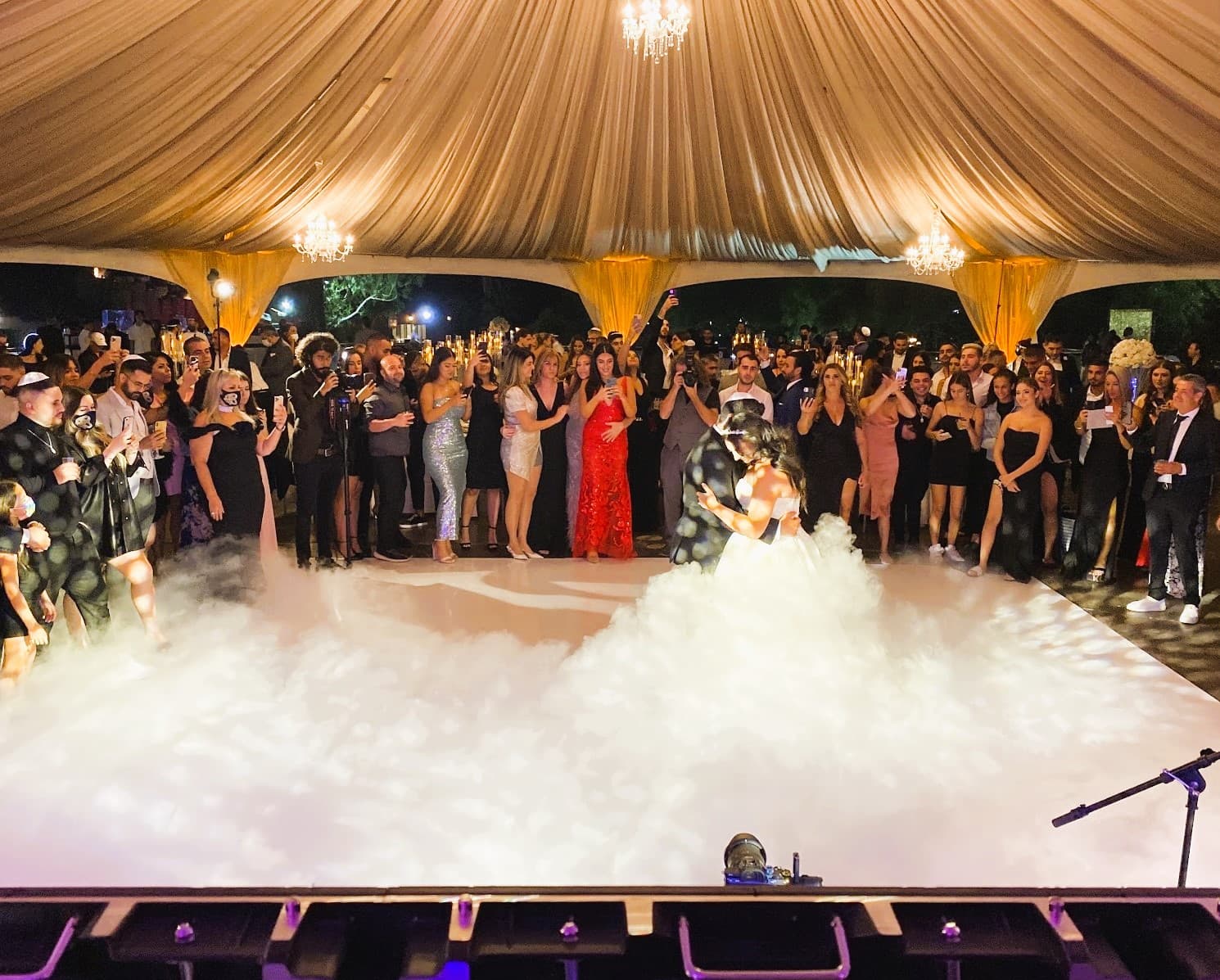
Many LA couples now transition directly from the glass-breaking into the hora and celebration entrance. This seamless build is our specialty. Whether you want a full live band for events Los Angeles, a live drummer layered over the DJ for that pounding hora energy, or a pure DJ set, the key is momentum. A great Israeli wedding DJ Los Angeles knows the hora playlist cold: "Hava Nagila," "Hine Ma Tov," "David Melech Yisrael," and enough tempo variety to keep dancers going through the chair lifts.
After the ceremony, the couple retreats for yichud — a private, quiet interlude. There's usually no music here, but this is when your entertainment team pivots the room, transitions guests to cocktail hour, and sets the tone for the reception. A thoughtful DJ fills cocktail hour with a curated blend of Israeli, jazz, and contemporary tracks so the celebration never loses steam while the couple is away.
The person orchestrating all of this matters more than any single song. DJ Gilad Emesh and the On Air Productions LA team have spent 20+ years reading Jewish and Israeli crowds across Southern California — understanding when a Sephardic family expects Middle Eastern rhythms, when a couple wants a Persian-Jewish fusion, and how to keep the hora going until the last guest collapses happy. Being recognized among the best Israeli DJ Los Angeles options isn't about equipment; it's about cultural fluency.
A Jewish wedding moves through a few named moments, and knowing them makes it easier to choose the music for each. Customs differ between Ashkenazi, Sephardic, Mizrahi and Persian families and between Orthodox, Conservative and Reform communities, so read these as the common pattern rather than the rule.
The tisch, Yiddish for "table," is the groom's gathering before the ceremony, common at more traditional weddings. Friends and family sit around him singing, he may begin a short teaching that guests playfully interrupt with more songs, and in many communities the ketubah is signed there.
Kabbalat panim means "receiving faces." Before the ceremony the bride greets guests, often seated on a decorated chair while soft music plays, and at many weddings the groom receives guests separately at his tisch.
The bedeken, also spelled badeken, is the veiling of the bride. The groom, usually escorted by singing family and friends, lowers the veil over her face; the custom recalls Rebecca covering her face when she first saw Isaac, and many parents bless the bride at this moment.
A chuppah is the wedding canopy the couple stands under during the ceremony: a cloth, sometimes a family tallit, held on four poles or a freestanding frame and open on all sides. It symbolizes the home the couple will build, and its open sides are often compared to the welcoming tent of Abraham and Sarah.
The ketubah is the Jewish marriage contract, traditionally written in Aramaic and signed by two witnesses before the ceremony. It is often read aloud under the chuppah.
At the end of the ceremony the groom, or in some weddings both partners, breaks a glass underfoot. It is most often explained as remembering the destruction of the Temple in Jerusalem even at the happiest moment; guests shout Mazal Tov and the music starts.
A common processional order at many American Jewish weddings looks like this, though your rabbi and your community may arrange it differently:
Two things set many Jewish processionals apart: both parents commonly escort each member of the couple, and the parents often stand under or beside the chuppah rather than sitting down. At many Orthodox and traditional weddings the two fathers walk the groom and the two mothers walk the bride, and the bride circles the groom, commonly seven times, when she reaches the chuppah; some couples now circle each other. Ask your rabbi which order your community follows, and let the music follow the order.
These chuppah and processional songs are verified recordings; many have several melodies, and your DJ, cantor or musicians will know the version your community sings.
A note on Here Comes the Bride: many Jewish couples choose not to walk to Wagner's Bridal Chorus because of the composer's well-documented antisemitism, and pick a Hebrew song or a classical piece such as Pachelbel's Canon instead.
Siman Tov u'Mazal Tov is the song most often played the instant the glass breaks, with guests shouting Mazal Tov and clapping along; Od Yishama, or an upbeat Hebrew song the couple loves, is the other common choice. Your DJ or band should be watching for the glass, not the clock, so the music starts on the sound of it breaking.
The same song usually carries the couple back up the aisle and into yichud, and a live voice makes it even more joyful: a live Israeli singer can lead the processional songs or the Siman Tov as you walk out. For the songs for every moment after the ceremony, from the hora to the last dance, see our wedding songs guide.
Absolutely — most LA couples do. A Hebrew-English MC makes this seamless, weaving Hebrew classics with English favorites so every guest, religious or secular, feels included.
This is common, especially in Orthodox settings. We work directly with your officiant and can arrange discreet live acoustic musicians for the moments where recorded audio isn't appropriate. Communication in advance solves it every time.
We embrace them. As a Israeli DJ Los Angeles team, we're experienced as a Sephardic wedding DJ Los Angeles resource, incorporating Middle Eastern rhythms, Ladino melodies, and Persian dance sets when your family's heritage calls for it.
Both work beautifully. Many couples love a DJ paired with a live drummer or saxophonist for the hora, while others prefer a full band. During your consultation we'll match the setup to your venue, budget, and vibe.
Your Jewish wedding ceremony is a once-in-a-lifetime blend of tradition, family, and joy — and the music is what stitches every moment together. From the tender badeken to the explosive glass-breaking hora, every cue deserves an experienced hand. If you're planning a celebration anywhere in Los Angeles or Southern California, reach out for a free consultation with On Air Productions LA. Let's build a soundtrack that honors your roots and gets your whole family dancing. Mazal tov!
Siman Tov u'Mazal Tov is the song most often played right after the glass is broken, as guests shout Mazal Tov. Od Yishama or an upbeat Hebrew song the couple loves are also common choices.
A tisch is the groom's pre-ceremony gathering, where family and friends sing around his table and, in many communities, the ketubah is signed. It is followed by the bedeken, when the groom goes to veil the bride.
The Jewish wedding dance is called the hora: a circle dance, often to Hava Nagila, in which the couple is lifted on chairs. It usually happens early in the reception.
Hava Nagila is the most widely known Jewish song played at weddings, usually for the hora. During the ceremony itself, Siman Tov u'Mazal Tov is the song most families recognize, played right after the glass is broken.
Get more of On Air on Google
Enjoying our event tips? Make On Air Productions LA a preferred source on Google — one tap, and our articles, videos and updates show up more in your Search results and AI answers.
Planning an event in Los Angeles? Explore what On Air Productions LA can do for you:
On Air Productions LA brings DJs, MCs, live music and full production to weddings, Bar Mitzvahs, corporate events, and private celebrations across Los Angeles.
Get a Free QuoteDiscover More
 Weddings
Jul 14, 2026
 Tips
Aug 26, 2026
 Entertainment
Sep 17, 2026
 Entertainment
Sep 23, 2026