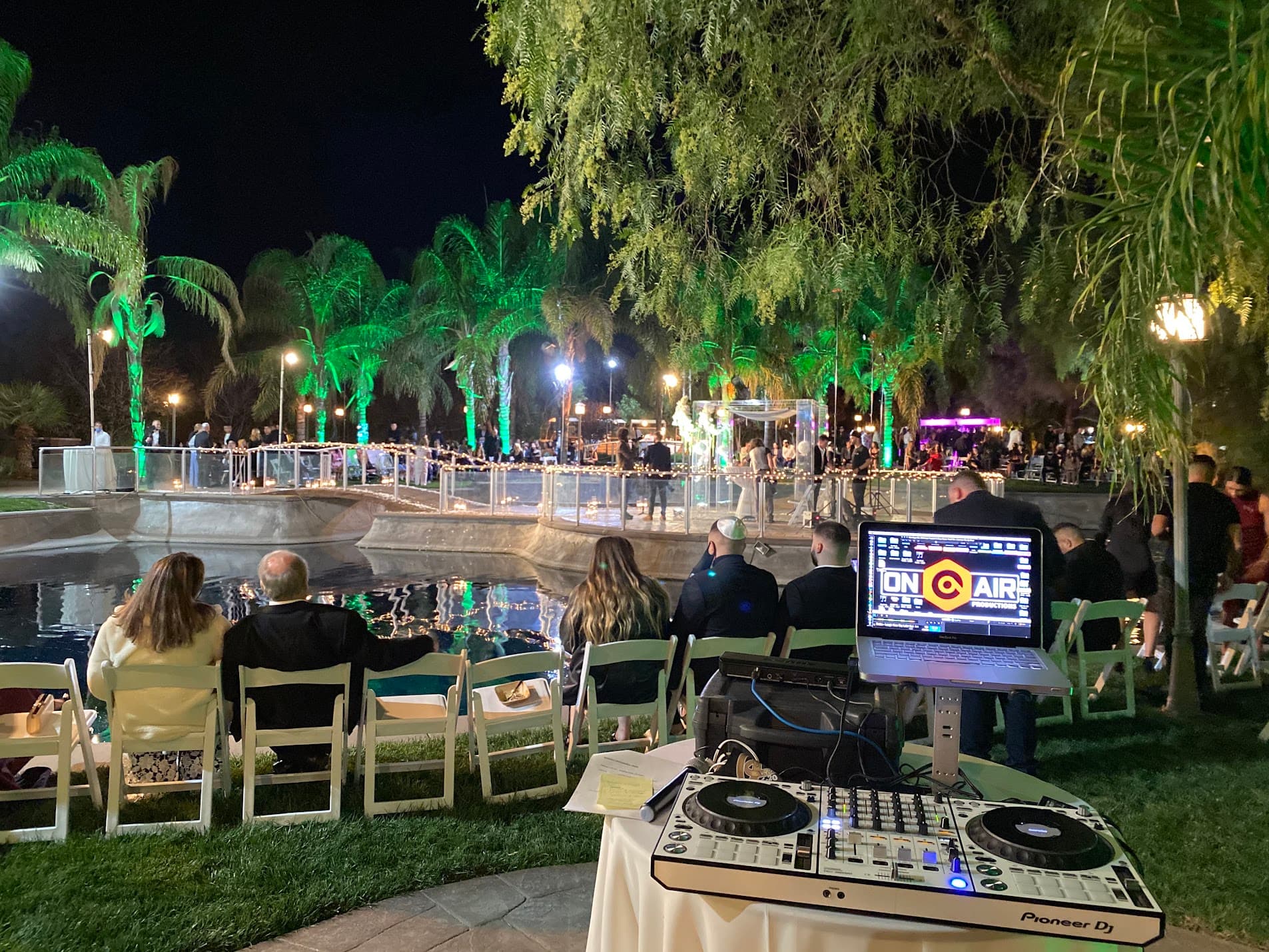


Oct 22, 2026
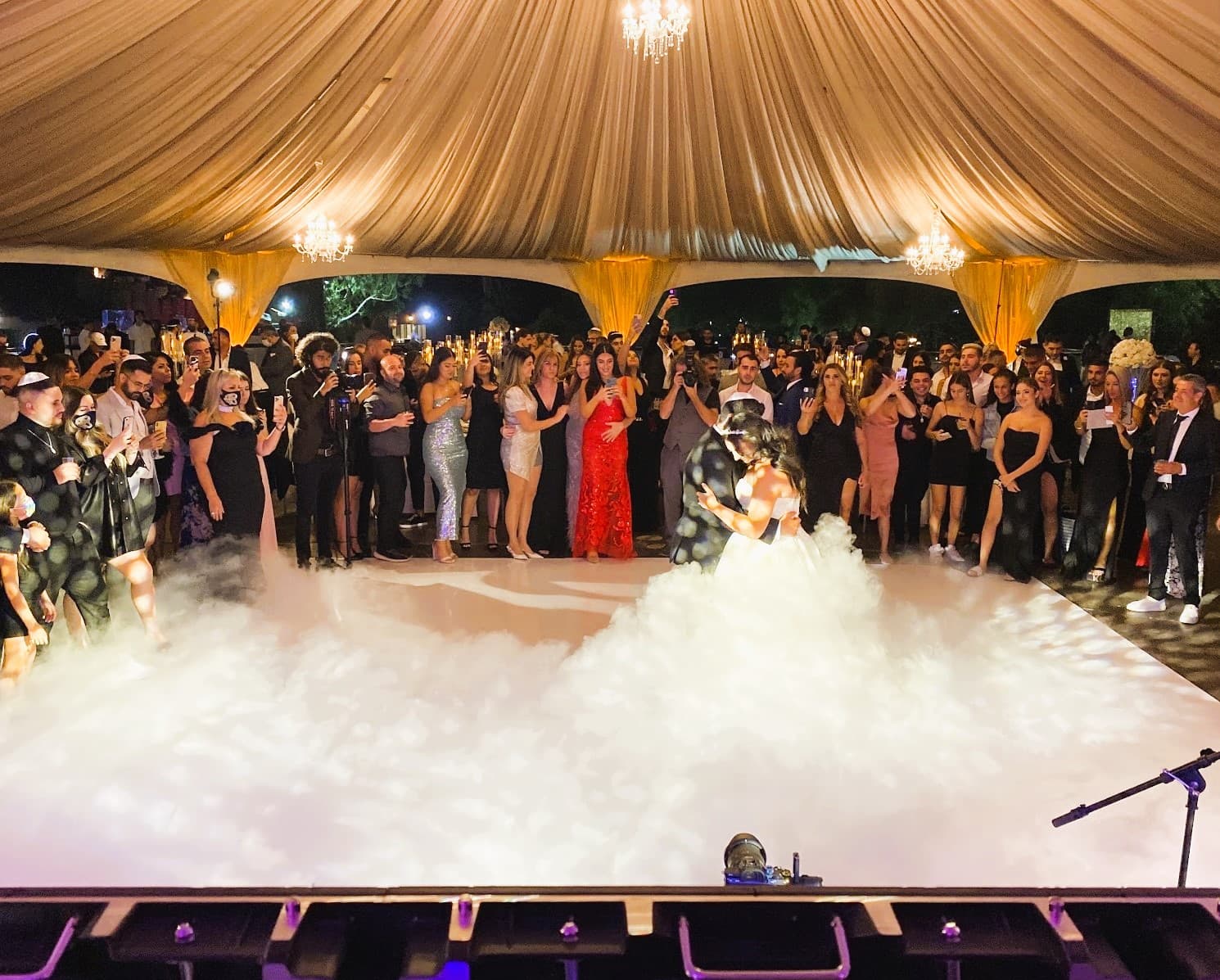
Oct 22, 2026 · On Air Productions LA
What to ask a Los Angeles venue before a Jewish or kosher wedding: the kitchen and caterer, the chuppah, room for the hora, sound limits and load-in.
Kosher wedding venues in Los Angeles are defined by the kitchen more than the room: the venue either has a kosher-certified kitchen or caterer, or lets you bring an outside kosher caterer. For any Jewish wedding venue, also ask where the chuppah stands, whether there is room for the hora, and how late the music can play.
Kashrut, the Jewish dietary laws, applies to food and to the kitchen it is prepared in, not to a ballroom or a garden. So a search for kosher wedding venues near me is really a search for one of two things: a venue with its own kosher kitchen or an in-house kosher caterer, or a venue that welcomes an outside kosher caterer and gives them the kitchen access they need. Ask about both. A room you love can stay on your list without a kosher kitchen of its own, as long as it lets a kosher caterer in.
Families also keep kosher in different ways. Some want a fully kosher meal under a supervision they trust, some ask for glatt kosher meat, a stricter standard that applies to meat, and some are happy with a kosher-style menu that leaves out pork and shellfish and never mixes meat with dairy. When families search for glatt kosher wedding venues, what they usually need is a caterer who serves glatt kosher meat, in a venue that lets that caterer work. Your rabbi can tell you which supervision your family accepts; once you know, the caterer questions below take minutes.
The twelve questions are grouped the way a tour of Jewish wedding venues in Los Angeles usually goes: the kitchen, the ceremony, the dance floor, the clock, and the production. They are the questions to ask a wedding venue when touring it for a Jewish wedding, so bring them on your visit and ask for the answers in writing.
This is the first question for any kosher wedding, and the answer puts each venue in one of three groups: kosher on site, kosher allowed from outside, or no outside caterers at all. Wedding venues in Los Angeles that allow outside catering may still limit who can work there, so ask whether a kosher caterer must be on an approved list, and how early that list has to be settled.
Kosher caterers work under a certification, often called a hechsher, and at many weddings a kosher supervisor, a mashgiach, is in the kitchen during the event. Ask the caterer which certification they hold and check it with your rabbi. Then ask the venue when the caterer and the supervisor can reach the kitchen, because a kitchen may need preparing before a kosher caterer can use it.
A kosher meal is only as kosher as the last thing served: the wedding cake, the cocktail-hour bites, the late-night snacks and the wine. Ask whether outside bakers and the bar must follow the same rules, and plan the desserts with the menu, since many families keep dessert free of dairy after a meat meal.
Walk the spot at the hour of your ceremony. Indoors, check the ceiling and the light; outdoors, check the sun, the wind and the ground. Ask whether the venue has a chuppah you can use or decorate, or whether you will rent one, and where the ceremony moves if it rains or the afternoon turns too hot.
Before many Jewish ceremonies, the ketubah, the marriage contract, is signed with the witnesses, and the groom lowers the bride's veil at the badeken. Families like a quiet room for this, close to the ceremony, with a table for the signing and space for the parents. Ask too whether there is a private room for yichud, the few minutes many couples spend alone right after the ceremony.
Breaking the glass needs a firm, flat spot under the chuppah, because thick carpet or soft lawn can stop a glass from breaking. Some venues don't allow glass near a pool or on certain floors, so ask before the day, and agree who will collect the pouch afterward. Our guide to what breaking the glass at a Jewish wedding means covers the moment itself, from the meaning to the music that follows it.
The hora is a circle dance, and at a Jewish wedding it can pull most of the room onto the floor at once, with circles inside circles. Ask for the size of the dance floor and where it sits among the tables. On a lawn or a terrace, ask whether a floor will be laid over the ground: lifting the couple on chairs is safer on a flat, solid floor than on grass or pavers.
The chair lift raises the couple, and often the parents, well above the crowd. Low ceilings, chandeliers and hanging decorations over the floor are worth a look on the tour, because they decide how high the lifters can go. Our guide to the hora and the chair lift explains how the moment is built.
Many venues set a time when amplified music must stop, and some, outdoor and residential venues in particular, set a volume limit as well. Ask for both in writing. Everything from the hora to the last dance has to fit inside them, so these two answers shape the timeline more than any other.
Traditionally, Jewish weddings aren't held on Shabbat, so a Saturday wedding usually begins after Shabbat ends, which in a Los Angeles summer can be well after 8 PM. If you want a Saturday night, ask how late the venue lets the evening run, and whether the whole schedule can move later to match. Your rabbi will tell you the exact time Shabbat ends on your date.
Ask for the load-in time and the route: a loading dock, an elevator, and how far it is from where vendors park. Then ask where the power is. A DJ, uplighting, an LED wall, a live Israeli singer and other live musicians each need outlets of their own, and a ceremony outdoors with a reception in another room needs power in both places. If an LED wall or uplighting is part of your plan, bring the venue's answers to whoever is producing it.
Some venues, hotels in particular, require their own AV team for sound, screens or rigging. Ask what is required and what your own DJ and production team may bring before you sign, so the music, the microphones for the chuppah and the lighting come from one plan instead of two.
| Ask about | What you want to hear |
|---|---|
| Kitchen and caterer | A kosher kitchen or caterer, or a clear yes to an outside kosher caterer |
| Supervision | The certification your rabbi accepts, with kitchen access for the supervisor |
| Cake, bar and late-night food | The same standard as the meal |
| Chuppah | A spot that works at your ceremony hour, plus a rain or heat plan |
| Ketubah, badeken and yichud | A quiet room close to the ceremony |
| The glass | A firm floor under the chuppah, with glass allowed there |
| Dance floor | Room for the hora circles on a flat, solid surface |
| Ceiling | Height for the chair lift over the dance floor |
| Music end time and volume | Written limits that fit your timeline |
| Saturday night | An end time late enough for an evening that starts after Shabbat |
| Load-in and power | A clear window, a route, and power where the DJ and lighting stand |
| In-house AV | What is required, and what your own team may bring |
These are also good questions to ask a wedding venue before booking any celebration with a chuppah and a hora, kosher or not. The venue's answers tell you quickly whether the day will run smoothly there.
Kosher weddings take place all over Los Angeles, in venues with their own kosher kitchen or caterer and in venues that welcome an outside kosher caterer. Policies and certifications change, so check each venue's current answer and confirm the caterer's supervision with your rabbi.
Glatt kosher is a stricter standard that applies to meat, and many families who keep kosher ask for it at a wedding. Which standard you need is your family's choice, made with your rabbi.
Many couples do, because a Jewish ceremony can take place anywhere with room for the chuppah. The food question depends on whether your family keeps kosher; if it does, ask whether the venue allows an outside kosher caterer.
Once the date and the venue are set, because the venue's rules on load-in, power and music end times shape what any DJ for a wedding in Los Angeles can plan. Bring those answers to your first call, and the plan for the chuppah, the hora and the rest of the night can start right away.
A venue that answers these twelve questions well makes the day easier for everyone who works it. Once you have yours, we plan the music, the microphones for the chuppah and the hora around its rules, whether you need a DJ for an Israeli wedding, a Jewish one, or a room that is a little of both. See how we work as a DJ for a Jewish wedding in Los Angeles, read our Jewish and Israeli wedding guide and what happens at a Jewish wedding, hour by hour, and watch a summer Jewish wedding of ours outdoors, with a saxophone, an electric violin and a drummer playing beside the DJ. Then send us your date and your venue, and we'll put together a personalized quote.
Get more of On Air on Google
Enjoying our event tips? Make On Air Productions LA a preferred source on Google — one tap, and our articles, videos and updates show up more in your Search results and AI answers.
Planning an event in Los Angeles? Explore what On Air Productions LA can do for you:
On Air Productions LA brings DJs, MCs, live music and full production to weddings, Bar Mitzvahs, corporate events, and private celebrations across Los Angeles.
Get a Free QuoteDiscover More
 Recording Studio
Jul 15, 2026
 Jewish Weddings
May 29, 2026
 Weddings
Jul 9, 2026
 Tips
Aug 31, 2026