October 6, 2026
October 6, 2026 · On Air Productions LA
How many uplights your venue needs, wireless vs wired, color palettes, pin spots, monogram gobos, moving heads, haze rules and lighting that photographs well.
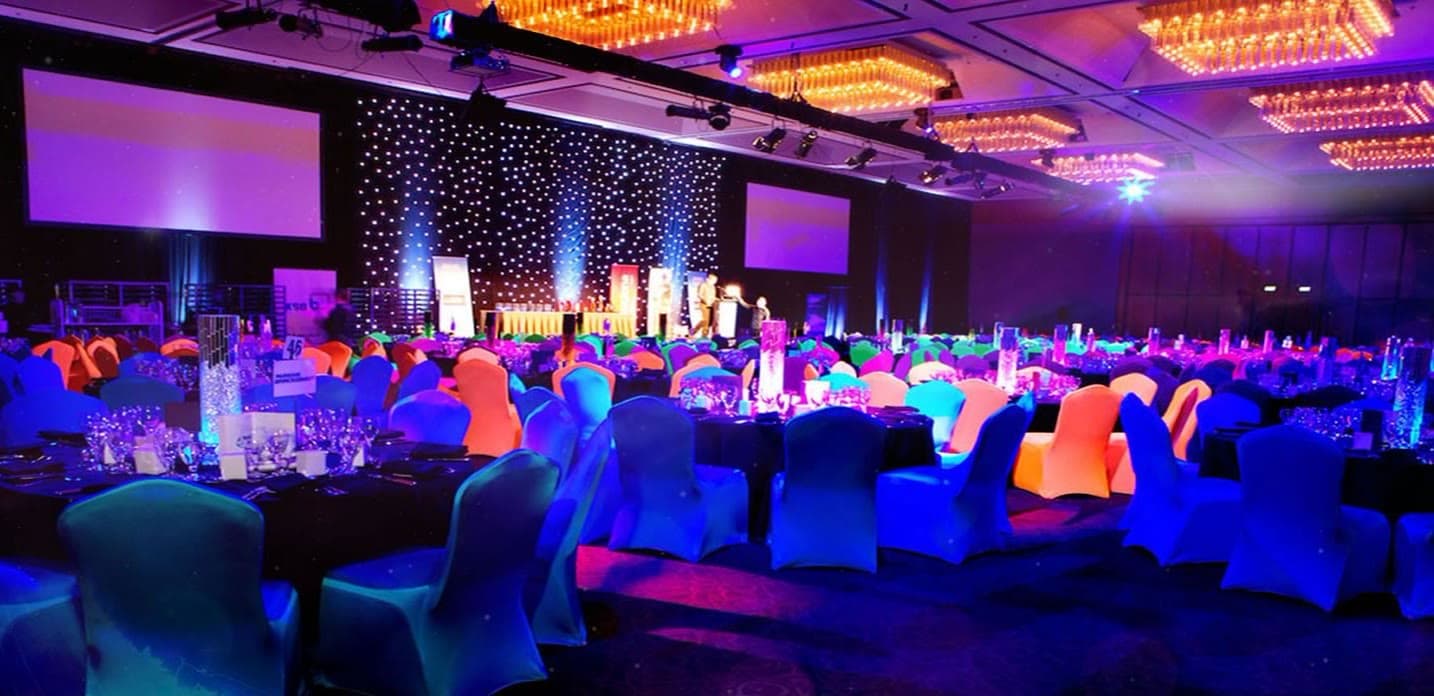
Plan roughly one uplight for every 6 to 8 feet of wall you want lit for an even wash of color, or one every 10 to 12 feet for a spaced, scalloped look. For a typical ballroom wedding or Bar Mitzvah of 150 to 250 guests, that usually works out to somewhere around 20 to 36 fixtures, depending on the walls, columns and features in the room.
Guest count is a rough proxy; wall length is the real answer. Decide which surfaces deserve color, such as the long walls, columns, bar, stage and entrance, and skip the ones you would rather hide: kitchen doors, windows that go black at night, mirrored walls.
Then add up the length of the walls you kept and divide by your spacing. Say a ballroom has two 80-foot walls and one 50-foot wall you want lit, with the stage on the fourth. That is 210 feet. At 8-foot spacing, you need about 26 uplights for the walls. Add one for each of six columns and a couple for the bar, and you are at about 34.
Most event uplighting today is wireless: battery-powered LED fixtures controlled by radio. They place anywhere in seconds, with no extension cords along the walls, no cable ramps across service paths and nothing for guests, servers or running kids to trip over. In a tent, on a lawn or along a wall with no outlets, wireless is often the only clean option.
Wired uplights still have a place. They run on house power, which suits multi-day installations, but they bring cables and need outlets. For a single-evening wedding, Bar or Bat Mitzvah or gala, wireless fixtures with batteries sized for the full event plus a buffer are the standard. Our uplighting in Los Angeles uses wireless, battery-powered LED fixtures for exactly these reasons.
Start with what is already in the room: your florals, linens, invitation suite or brand colors. Uplighting reads well when it feels like part of the same design rather than a separate show.
The wall itself changes the color. A beige wall warms everything, dark wood absorbs light and a white drape shows the purest version of the hue, so judge a palette on the venue's actual surfaces whenever you can. For more on shaping the whole look of a celebration, see our weddings and private events page.
Through the ceremony, cocktail hour, dinner and toasts, hold a steady, soft palette that keeps faces warm and conversation easy. When the dance floor opens, shift to richer, more saturated colors and slow movement that follows the music. At a Jewish wedding, the hora is the natural moment for that change: the room lifts, the lights lift with it, and the energy carries straight into the dance set. Bring the warmth back for the cake cutting and the last dance so those photos stay true.
A pin spot is a small fixture with a narrow beam, aimed at a single object from above. Pointed at a centerpiece, it makes the flowers glow while the table around them stays soft. The same trick works on the cake, the sweetheart table, the escort card display or the ketubah, and it is especially striking once the room lights come down.
Plan one pin spot per centerpiece table, plus one for each feature. They hang overhead, so they need truss or the venue's rigging points; confirm early what the room allows.
A gobo is a stencil placed inside a light so it projects a shape. A monogram gobo puts your initials, names or wedding date on the dance floor or a wall; a custom gobo can carry a Bar or Bat Mitzvah logo, a family crest or a company mark. Glass gobos hold fine detail and color, while metal gobos suit bold, single-color designs. Custom artwork needs production time, so finalize the design well ahead of the event.
Moving head lights are motorized fixtures that pan, tilt, change color and change shape on command. They are the core of intelligent lighting and come in three broad types:
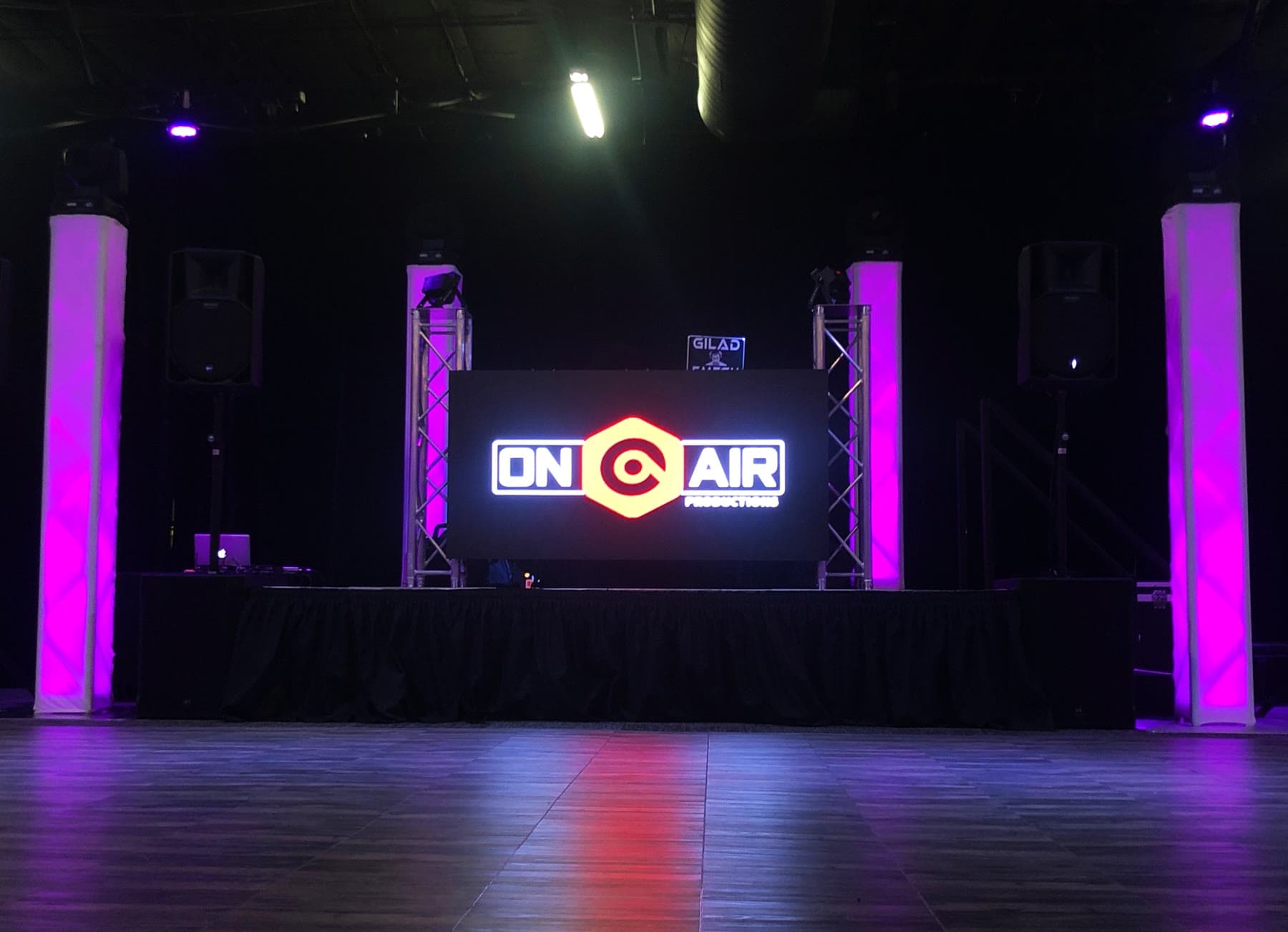
Hung from truss towers flanking the DJ booth or spread across the stage, a handful of moving heads changes the feel of a dance floor in a second. Programmed to the music and run live, they mark the grand entrance, the first notes of the hora or a mitzvah hype video with a burst of movement. Our event lighting rental in Los Angeles covers the full range.
Dance-floor lighting comes from above and lights the people: color, movement and beams over the crowd. An LED dance floor lights up from below, with patterns, color and even names glowing under guests' feet. Many celebrations pair the two, especially B'nai Mitzvahs, where an LED floor, an LED DJ booth and moving heads build one look. Size the floor to the number of guests you expect dancing at once, not the full guest list.
Anywhere someone speaks or performs, faces need light. A front wash keeps speeches, toasts and a live band visible to the room and the cameras, while backlight separates performers from the background. Truss towers give the fixtures a home and frame the DJ booth or band as a designed set. For galas, fundraisers and awards, corporate event lighting adds brand-colored washes, speaker lighting and cues tied to the program, and thoughtful stage design plans the truss, screens and lights together.
Haze is a fine, nearly invisible mist that makes light beams visible in the air. It is not fog, which is thick, low and hides the room. Without haze, beam fixtures look like small dots on the walls; with a light haze, they become the sweeping shafts of light people picture.
Venue rules vary widely. Many buildings use smoke detectors that haze can trigger, so some venues limit haze, require their engineering team to manage the detectors, or prohibit it entirely. Ask the venue first. Las Vegas resorts commonly have their own in-house AV crews, and we talk with them early so the haze question is settled long before the event. Cold sparks need their own venue approval as well.
Cameras see color more intensely than eyes do; a deep red or magenta that feels moody in person can turn faces an unflattering shade on camera. A few habits keep the pictures strong:
Light the chuppah or ceremony arch so the couple glows for the processional, keep dinner warm, then open the floor with color and movement for the hora. A monogram gobo on the dance floor ties the design together. In Nevada, we plan every Jewish wedding in Las Vegas the same way, with lighting, music and MC on one timeline.
Dim the room for the candle-lighting and put a pin spot on the cake and candles, then launch the party with moving heads, an LED dance floor and the honoree's name in light. Our Bar Mitzvah production builds lighting, screens and entertainment as one show.
Plan brand-colored uplighting, a clean stage wash for speakers, pin spots on auction items and a clear lift in energy for the after-party.
Bundling lighting with the DJ, sound and screens under one team keeps the cues, the power and the timeline in one plan; see our event lighting rental in Las Vegas for Nevada events. Contact us for a personalized quote.
It depends on the room more than the guest list, but a reception for 150 often lands around 16 to 28 uplights. Measure the walls you want lit, plan one fixture every 6 to 8 feet for an even wash, and add one per column.
For a one-night event, wireless battery-powered uplights are usually the right call: no cables, quick placement and clear walkways. Wired fixtures suit long, multi-day installations with easy access to power.
Uplighting washes walls and columns with color to set the mood. Pin spots are narrow beams that highlight centerpieces and the cake. Dance-floor lighting uses moving heads and wash fixtures overhead to put color and movement on the crowd.
Yes. LED uplights mix a very wide range of colors, so the palette can follow your florals, linens or invitations. Seeing the colors on the venue's walls is the surest check, because wall color shifts the result.
Beam effects need haze to show in the air. Spot and wash fixtures still work without it, projecting patterns and color onto the floor, walls and guests, so a room that does not allow haze can still have a lively dance floor.
Yes. Our crew sets up lighting in Las Vegas, Henderson and Summerlin with fixtures brought from Los Angeles, and the quote you receive already covers the travel.
Lighting is where a room stops looking like a venue and starts looking like your event. Tell us about your date, your venue and the feeling you want, and we will design the uplighting, pin spots, gobos and dance-floor lighting together with your music and sound. Request your personalized quote to get started.
Get more of On Air on Google
Enjoying our event tips? Make On Air Productions LA a preferred source on Google — one tap, and our articles, videos and updates show up more in your Search results and AI answers.
Planning an event in Los Angeles? Explore what On Air Productions LA can do for you:
On Air Productions LA brings world-class entertainment to weddings, Bar Mitzvahs, corporate events, and private celebrations across Los Angeles.
Get a Free QuoteDiscover More
 Jewish Events
June 7, 2026
 Weddings
July 18, 2026
 Entertainment
October 1, 2026
 Recording Studio
July 15, 2026


