
October 6, 2026
October 6, 2026 · On Air Productions LA
LED wall or projector? Compare brightness, daylight use, image size, rear-projection space and décor value for weddings, mitzvahs and corporate events.
Choose an LED wall when the room has any ambient light, the event is outdoors, the screen doubles as décor, or you need a large, seamless image; choose a projector for smaller, darkened meeting rooms and breakouts where slides are the main content. The bigger and brighter the room, the stronger the case for LED.
A projector throws light onto a surface, and what you see is the light that bounces back. An LED wall is the light source: thousands of tiny red, green and blue diodes, each switching on to build the picture. That one difference explains almost everything else in this comparison.
Because projection is reflected light, the darkest black a projector can show is the color of the screen with the room's light falling on it. Chandeliers, uplighting, a window or the glow of an exit sign all lift that black toward gray and flatten the image. An LED wall simply switches its pixels off for black, so contrast survives a room that is lit for dinner or dancing.
Projector brightness is rated in lumens and LED brightness in nits. The units differ, but the result in a real event room is easy to describe: a projector needs the dark to look rich, while an LED wall looks good in the dark and still looks good with the lights up.
Think about how an event actually runs. During a wedding dinner, the room is softly lit so guests can see their plates and each other. At a gala, the stage is lit for speakers and the tables for the auction. At a conference, attendees need enough light to take notes. Dimming the room far enough for projection to look rich usually dims the atmosphere with it.
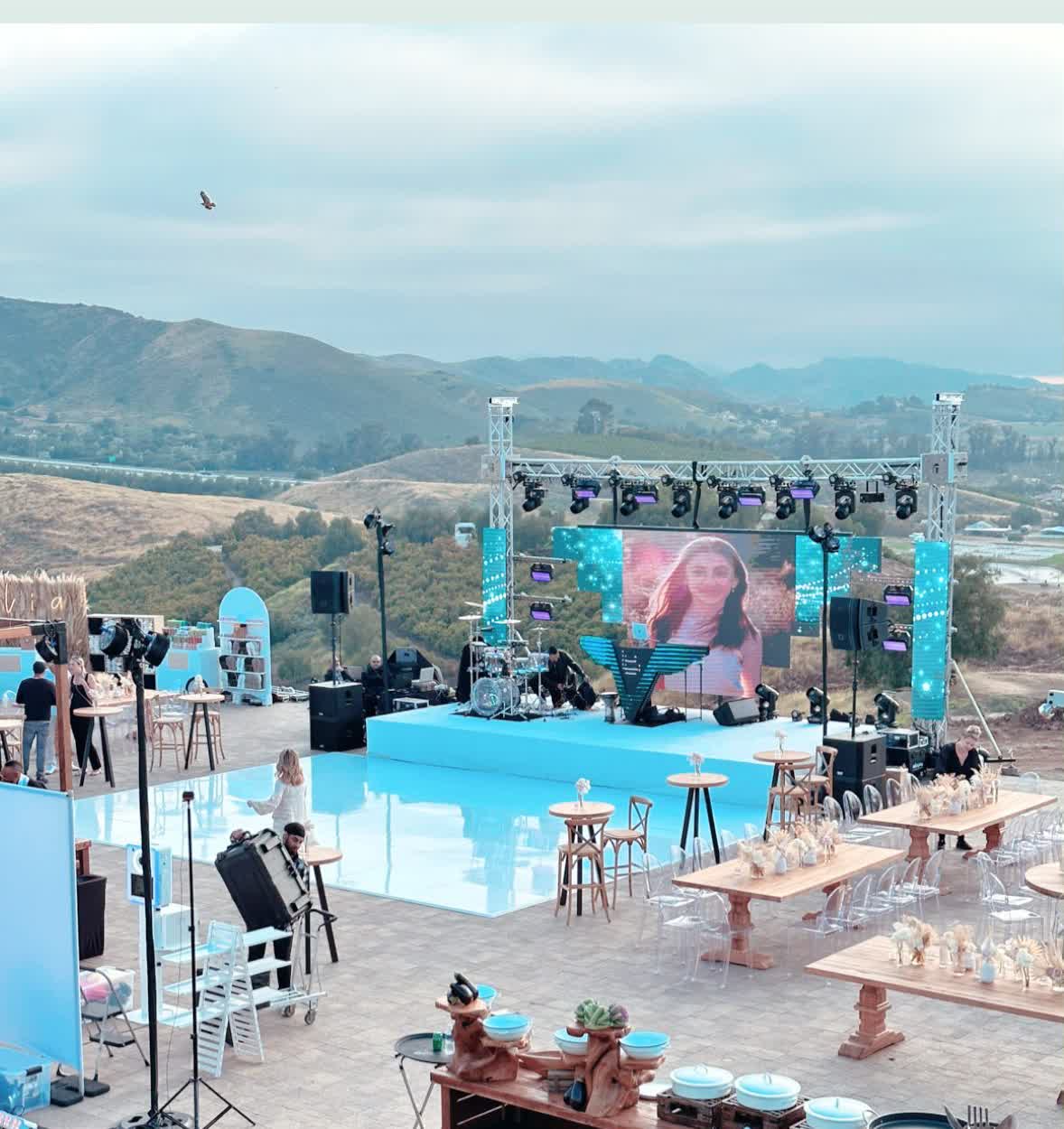
Outdoors, the gap becomes decisive. Daylight overwhelms projection until well after sunset, which rules it out for an afternoon ceremony on a Southern California lawn, a rooftop cocktail hour in Downtown LA or a pool-deck event under the Las Vegas sun. Daylight-bright outdoor LED panels are built for exactly those settings and are sealed against dust and moisture.
A projector has a fixed resolution, such as 1080p or 4K, at any image size. The catch is brightness: the same light is spread over a larger area as the image grows, so a projection that looks punchy at 8 feet wide looks noticeably dimmer at 20 feet. Filling a big screen in a bright room means more powerful projectors, or several projectors blended edge to edge, which adds alignment work and rigging.
An LED wall works the other way around. Brightness stays the same whether the wall is a handful of panels or a full stage, while resolution depends on pixel pitch and size. As a rough guide, a wall's pitch in millimetres matches the distance in metres from which it starts to look seamless, so a 3 mm wall reads smoothly from about 3 metres back. Our LED screens and video walls are planned around that relationship.
For guests sitting very close, a good projector on a quality screen can look smoother than a coarse LED wall. For guests spread across a ballroom, the LED wall's brightness and contrast usually win.
There is also a design question. A projection screen is a frame on legs or a surface on the wall. It reads as a presentation screen, which is exactly right for a breakout session and a little out of place behind a sweetheart table.
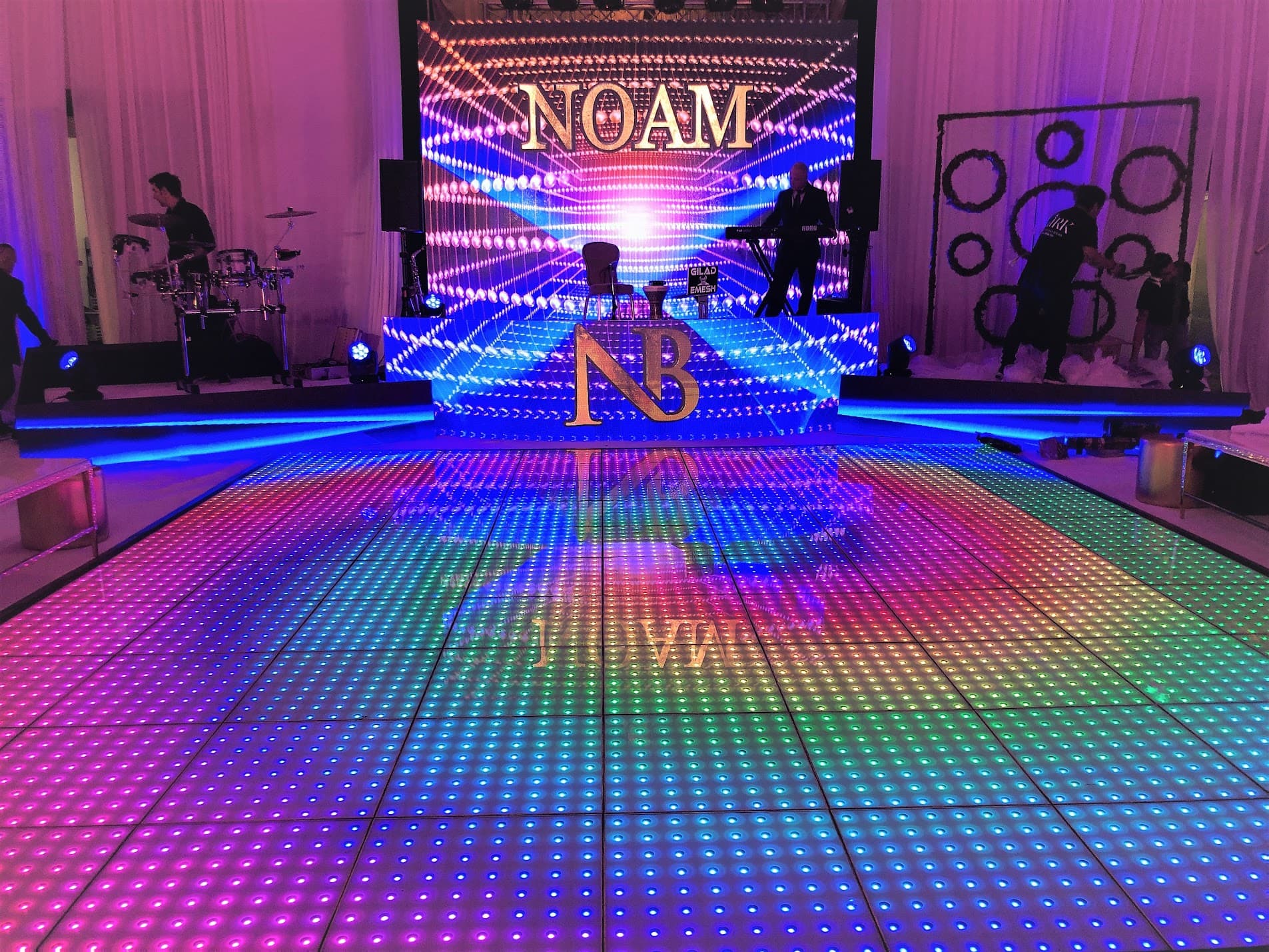
An LED wall can be the scenery. It can span the full width of a stage, wrap a DJ booth, frame an entrance or carry a monogram behind the dance floor, and between moments it can hold a soft texture that matches the room. For wedding LED walls and mitzvah name walls, this is often the deciding factor: the screen becomes part of the décor rather than equipment parked in front of it.
Projection is not obsolete. It is the right tool in plenty of situations:
Many corporate events use both: an LED wall with live camera feeds in the main room, projectors and screens in the breakouts. Good AV systems planning matches each room to the right tool instead of forcing one answer everywhere.
The dinner slideshow is the classic wedding video moment. With a projector, that means dimming the room and tucking a screen into a corner. On an LED wall, the montage plays in full color while the room keeps its glow, and the same wall shifts to a monogram for the first dance and to animated visuals once the party starts. For an outdoor ceremony before sunset, LED is the only realistic option.
Mitzvah screens work hard: a custom name wall for the entrance, a montage, candle-lighting visuals naming each honoree, game screens for the kids and a hype video before the dance floor opens. Kids dancing in front of a projector would cast shadows across all of it. An LED wall paired with an LED DJ booth and dance-floor lighting keeps every moment bright, as in our Bar Mitzvah LED wall and lighting setups for Las Vegas.
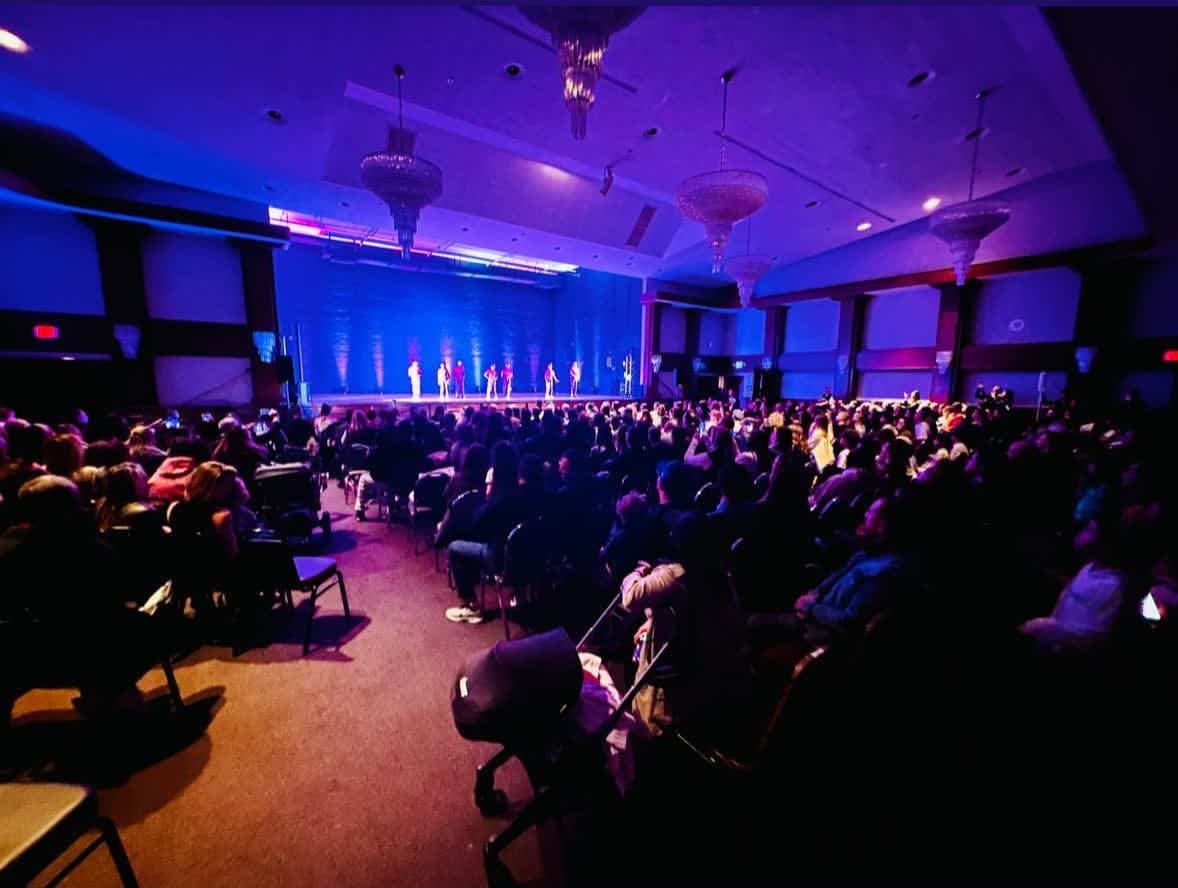
At a general session, launch or awards night, a corporate LED video wall carries the presentation, the speaker's live camera feed and sponsor loops with the house lights at a comfortable level. Confidence monitors face the stage, breakouts run on projectors, and one team handles the corporate event AV production from sound to screens.
From our Los Angeles base, our own crew and equipment cover Las Vegas, Henderson and Summerlin, and one clear quote includes the trip. Our AV rental in Las Vegas page covers the planning details.
For an LED wall, the main factors are wall size, pixel pitch, indoor or outdoor panels, ground stack or truss, live cameras and operators, content design and hours on site. For projection, they are projector brightness, lens type, screen size, front or rear setup, the dress kit around the screen and how many rooms need a screen.
As the screen grows and the room gets brighter, projection needs stronger projectors, bigger screens and sometimes several blended units, so the two options move closer together. The right choice comes from your room, your content and your timeline. Contact us for a personalized quote.
If the screen will play during dinner or dancing with the room lit, or sit behind the head table or dance floor as décor, choose an LED wall. A projector can work when the only video moment is a short slideshow and the room can be dimmed for it.
Only after dark, and even then light from the venue affects contrast. For daylight or sunset events, daylight-bright outdoor LED panels are the practical choice.
Yes, when the wall is set up for cameras. A suitable pixel pitch, a high refresh rate and brightness tuned by an operator keep the screen clean on camera and stop faces from turning into silhouettes.
Roughly as much empty depth behind the screen as the projector's throw distance, which can take a large section of the room. Short-throw lenses reduce it; an LED wall needs only a few feet.
Yes, and many conferences do: an LED wall with IMAG in the general session and projectors in the breakout rooms. One team planning both keeps content, switching and timing consistent.
An on-site operator runs every LED wall we provide, working from the processor to set brightness, fire content on cue and switch in the live camera feed, so nobody on your team has to touch a laptop.
Not sure which way your room leans? Send us the venue, the guest count and what you want on screen, and we will recommend the setup that fits, whether LED, projection or a mix of both, as part of one production plan with sound, lighting and entertainment. Request a personalized quote and we will design it around your event.
Get more of On Air on Google
Enjoying our event tips? Make On Air Productions LA a preferred source on Google — one tap, and our articles, videos and updates show up more in your Search results and AI answers.
Planning an event in Los Angeles? Explore what On Air Productions LA can do for you:
On Air Productions LA brings world-class entertainment to weddings, Bar Mitzvahs, corporate events, and private celebrations across Los Angeles.
Get a Free QuoteDiscover More
 Bar Mitzvah
October 6, 2026
 Jewish Culture
August 24, 2026
 Tips
TipsAugust 30, 2026
 Tips
TipsJuly 8, 2026


